Ginza is known as one of the most expensive and luxurious districts in the world, filled with exclusive boutiques and Michelin-starred restaurants.
But behind the luxury stores and polished facades, there is a completely different side of Ginza.
One of the district’s highlights is the exclusive Ginza Six shopping complex, home to more than 200 stores. But our favorite part is the rooftop terrace. From here, you get fantastic views across Tokyo and can even catch a glimpse of Tokyo Tower – completely free of charge. Our favorite shop is a small bookstore next to Starbucks that also sells plants and origami. At Starbucks, we order matcha pastries and matcha drinks while taking shelter from the January rain.
The district is also home to more than 200 flagship stores. There is everything from huge multi-floor stores belonging to well-known Japanese everyday brands to extravagant fashion houses lining the main shopping street, Chuo-dori. We find Montbell’s flagship store on the edge of the district, but quickly realize that much of the selection is “Asia Fit” and designed specifically for the Japanese market. Daniel does, however, find a new lightweight rain jacket.
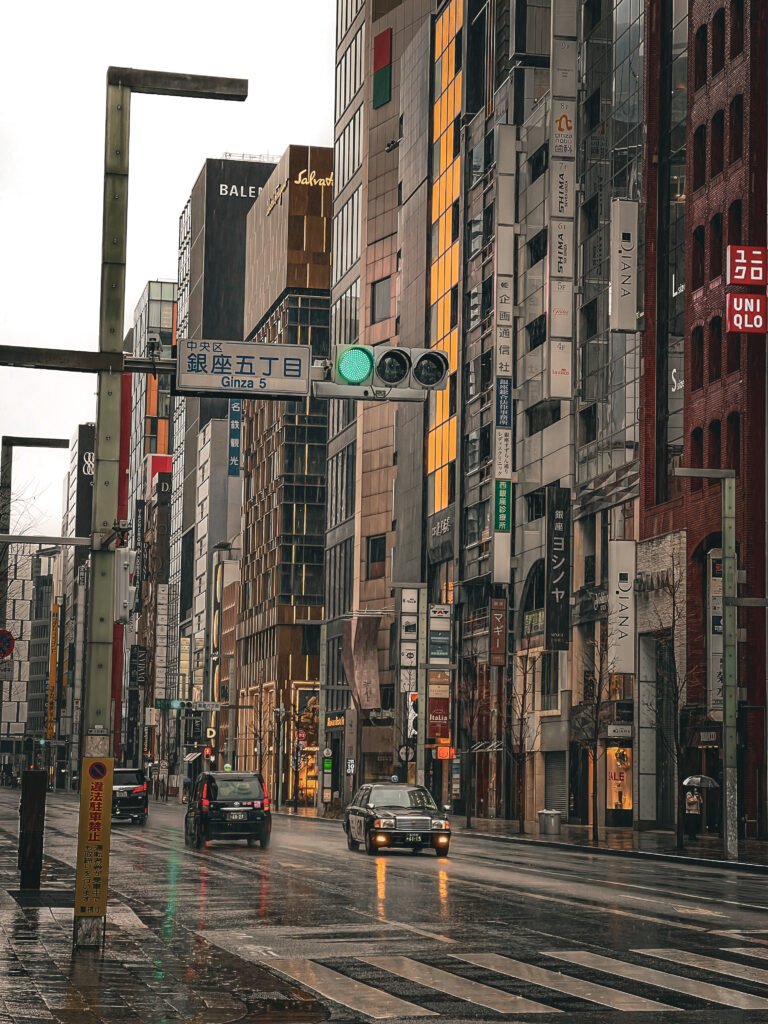
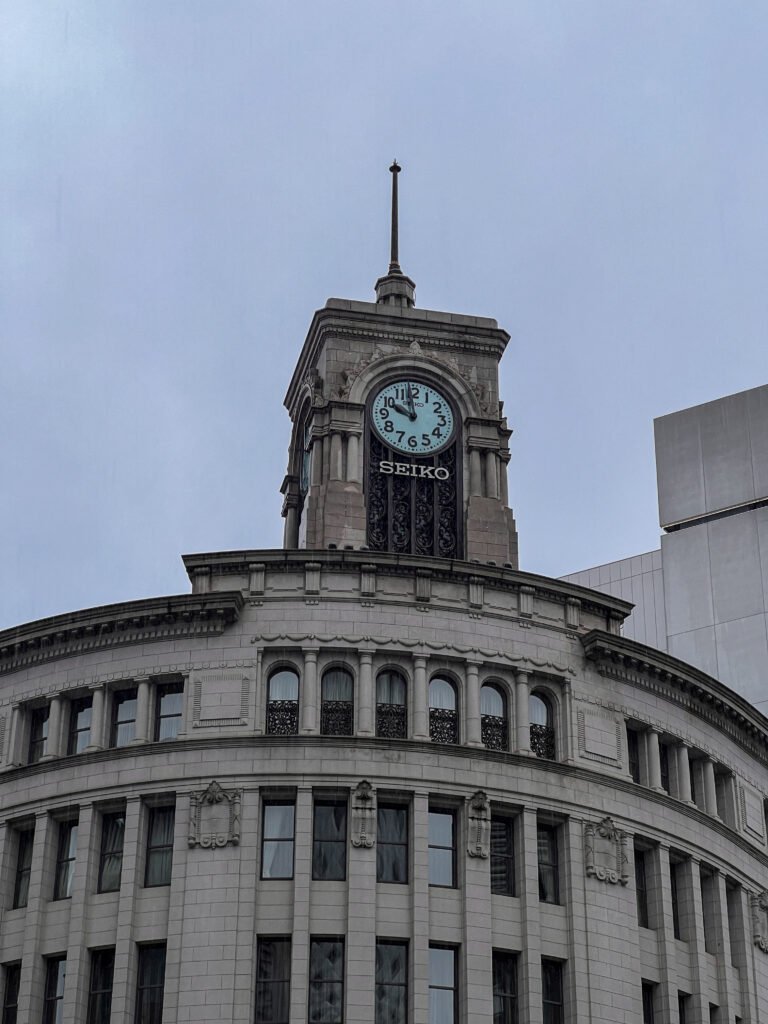
Ginza is the shopping district with the highest concentration of Western stores in Tokyo. It is also home to several department stores, including the famous Wako with its iconic Seiko clock tower, one of the district’s most photographed landmarks.
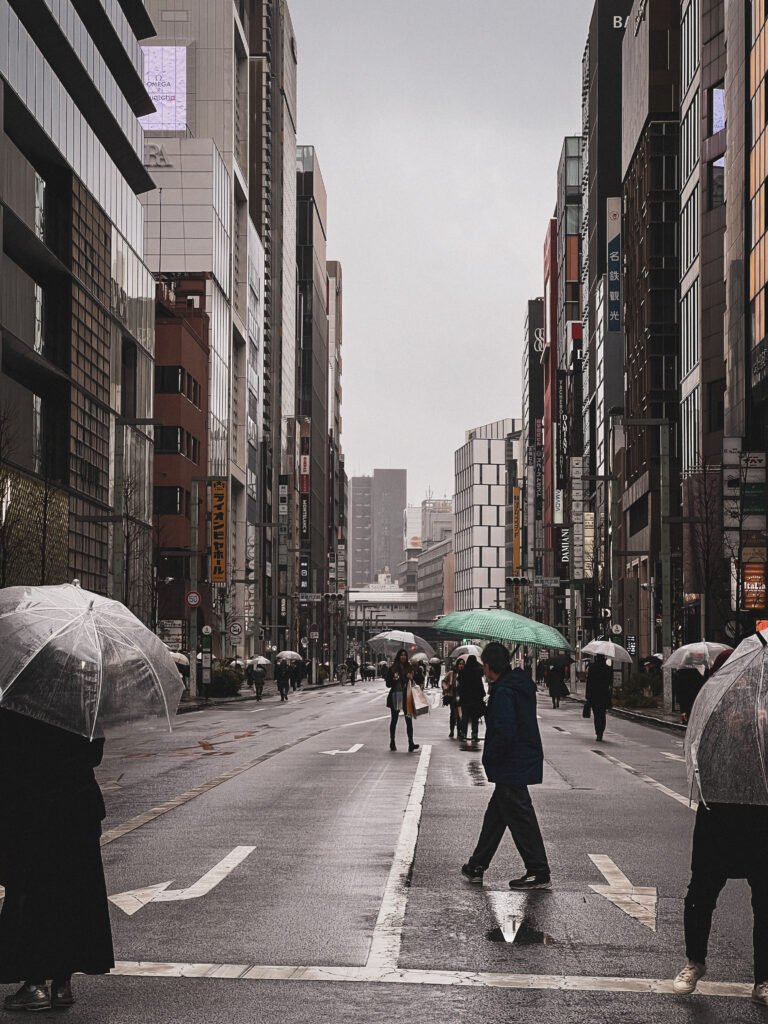
On weekends, from 12:00 to 17:00, the main street through the district is closed to traffic. This is Hokōsha Tengoku (歩行者天国), meaning “pedestrian paradise.” Don’t miss the chance to walk here on a rainy day, when the main street fills with Japanese people carrying transparent umbrellas. These umbrellas are sold for just a few hundred yen in almost every konbini (convenience store) and have become a symbol of everyday life in Japan. Many Japanese people don’t really consider the transparent umbrella a personal possession, but rather something that can be shared and borrowed. Since all the umbrellas look alike, they are often left at the entrances of shops and restaurants once the rain stops, only to be picked up by someone else when the rain returns.
But this post is about a different Ginza.
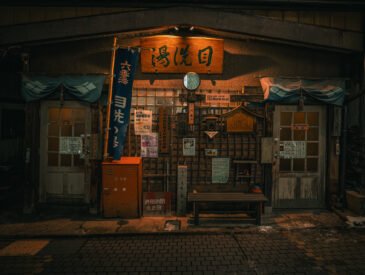
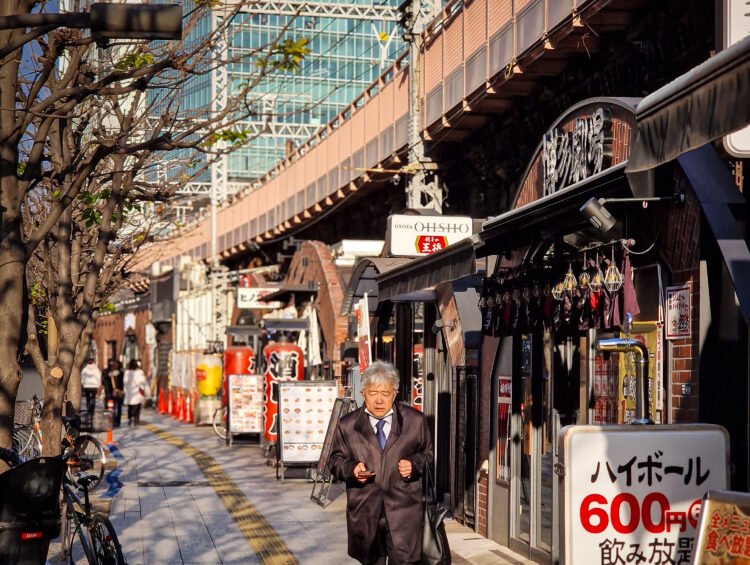
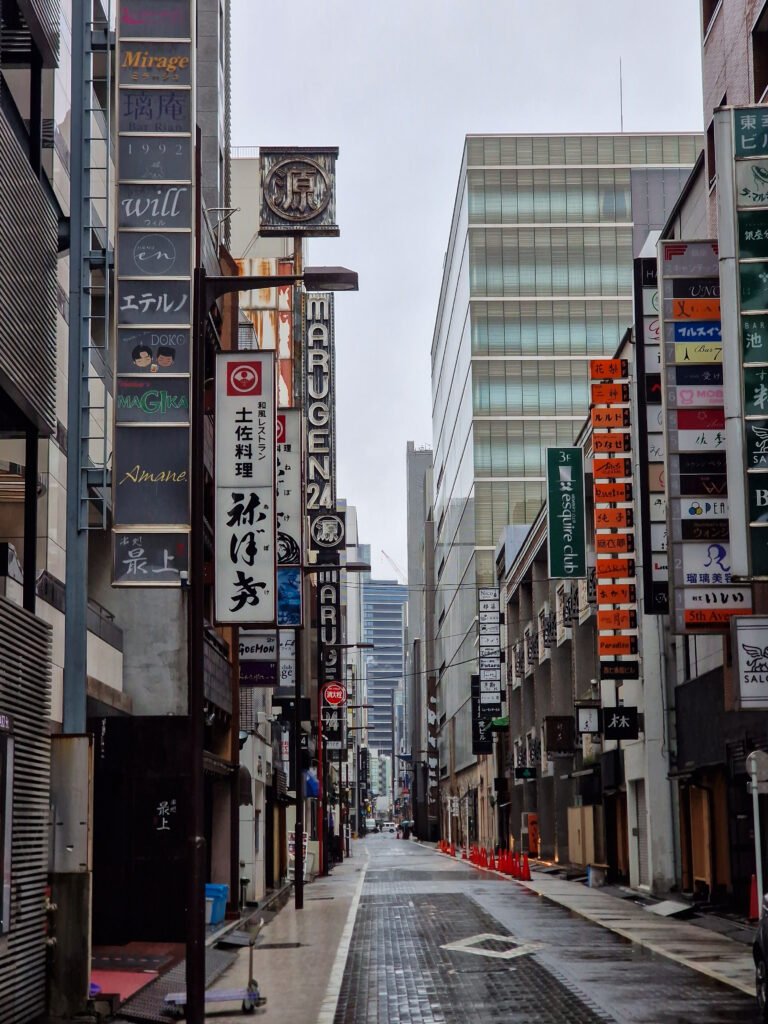
There is so much more to discover beyond the main street and the usual travel guides. The backstreets of Ginza are lined with neon signs, tiny shops and bars. There is almost no traffic, and the streets feel as if they were made for street photography. We walk almost completely alone, perhaps because the rain has scared away the other tourists, or perhaps we have simply found streets that few others have discovered in the middle of central Ginza. Dark alleyways are illuminated by the windows of bars, with laughter spilling out from inside.
You can also find lesser-known places here. Just one side street away from the main road, hidden in a dark basement, is Ginza 300 Bar. It is a standing bar where everything costs 300 yen. For an entrance fee of 900 yen, you get three drinks of your choice. We drink beer mixed with tomato juice from Heineken glasses. The drink is called a Red Eye, or Reddo Ai (レッドアイ) in Japanese. We also try local beer, whiskey and sake.
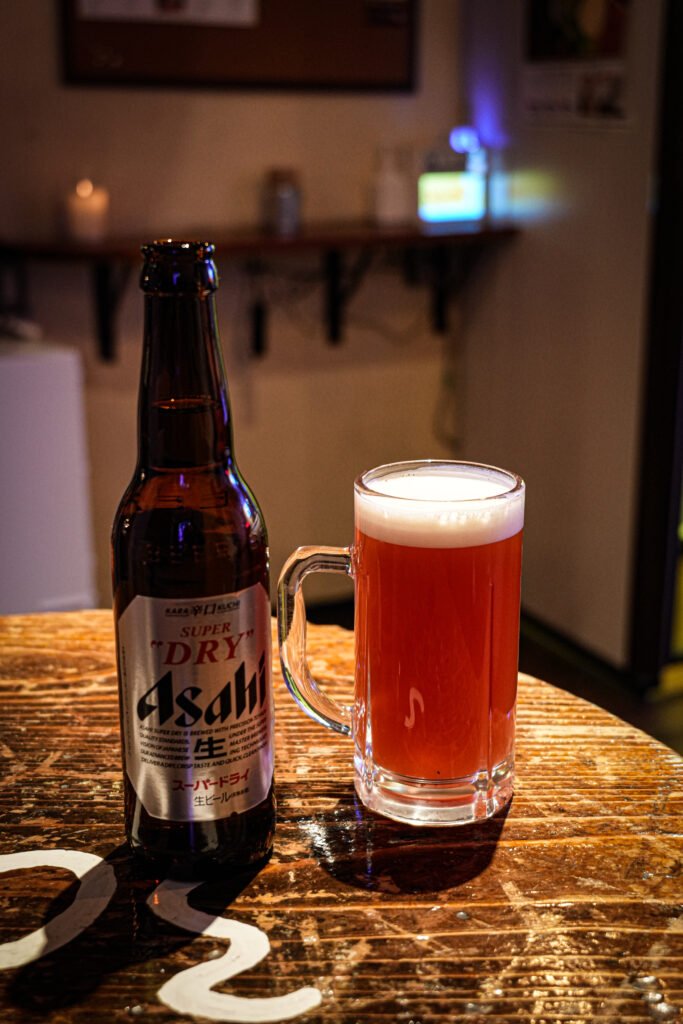
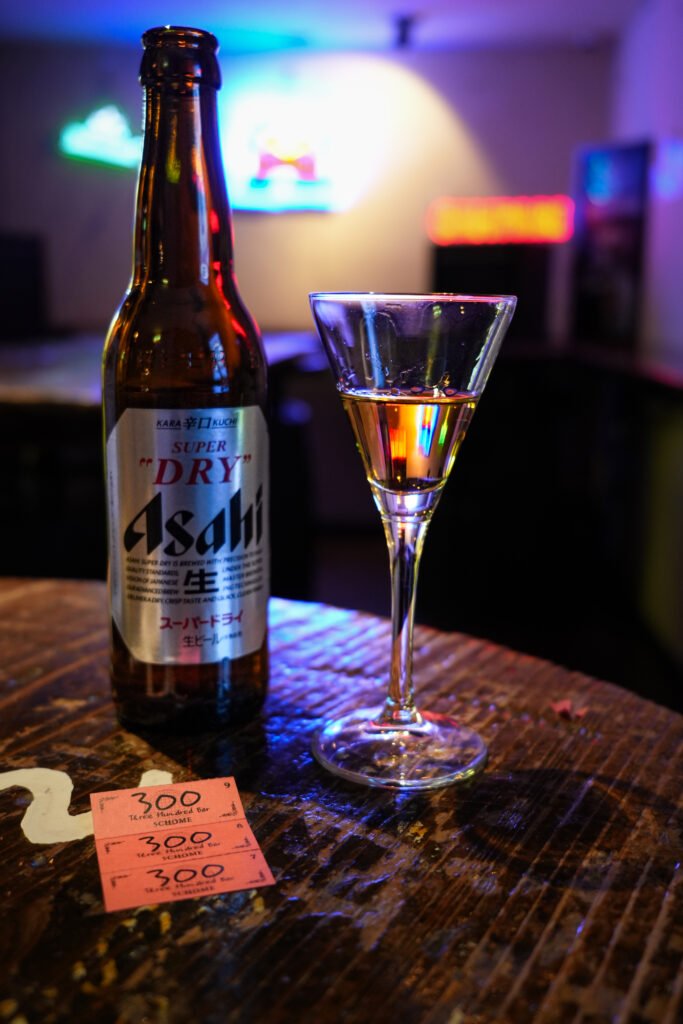
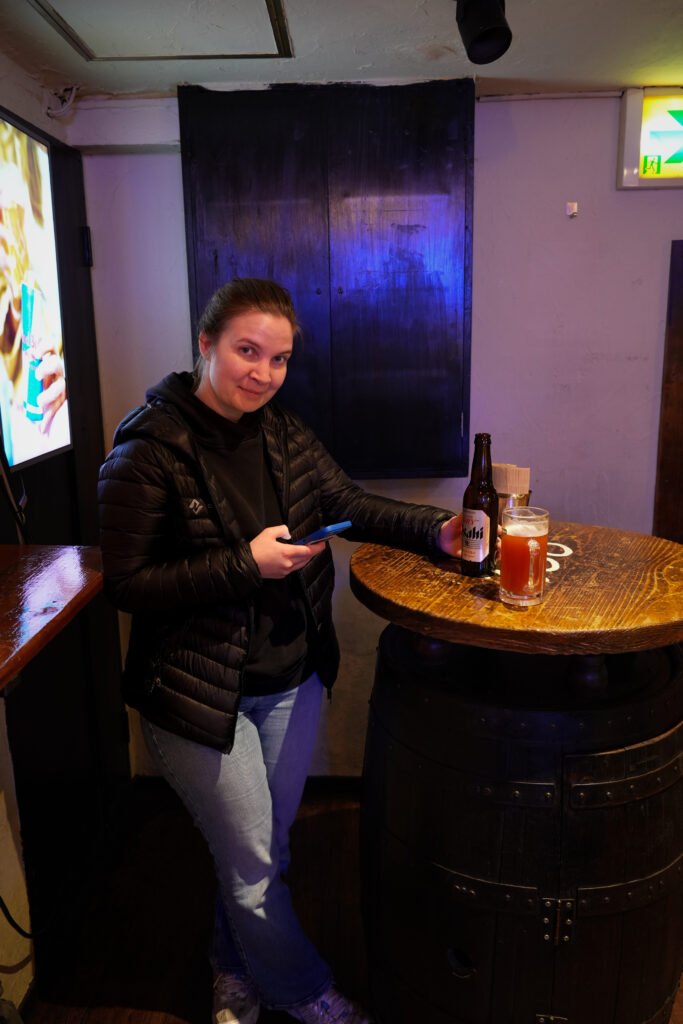
Standing bars and standing restaurants – known in Japanese as tachinomi (立ち飲み, “standing and drinking”) for bars and tachigui (立ち食い, “standing and eating”) for restaurants – are deeply rooted in Japanese culture.
We quickly understand why. For one thing, they are usually considerably cheaper than traditional restaurants. Since guests stand rather than sit, most people don’t stay for very long. This creates a high turnover of customers and allows owners to keep prices low despite using high-quality ingredients.
Secondly, people in Japan’s major cities often work long hours and have long commutes. Standing restaurants are therefore often located right next to, or even inside, train stations. An office worker can order from a ticket machine, eat their meal in just a few minutes and still catch the next train.
Thirdly, rents in central Tokyo – especially in areas such as Ginza and Shinjuku – are among the highest in the world. Without chairs and tables taking up valuable space, restaurants can fit more customers into a small area, making even tiny premises profitable.
Fourthly, Japan’s “salaryman” culture has made standing bars a natural part of everyday life. After work, many salarymen are expected to have a drink with colleagues or clients before heading home. A tachinomi, or standing bar, is the perfect place for this. It is informal and unpretentious. You have a quick beer, a few grilled skewers of yakitori, and then move on.
Japanese society is well adapted to eating and drinking alone. Many restaurants have seating specifically designed for solo diners, sometimes with screens separating them from other guests. In a standing bar, the barriers that otherwise exist in Japan’s relatively formal culture seem to disappear. It is incredibly easy to start talking to the person standing just a few inches away from you, or to the bartender, creating a warm and social atmosphere. Even we, two antisocial Swedes/Finns, managed to embrace Japanese standing-bar culture. We didn’t stay unnecessarily long and even ended up chatting with an Australian couple.
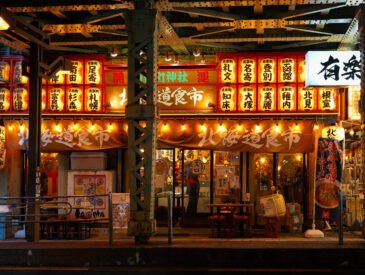
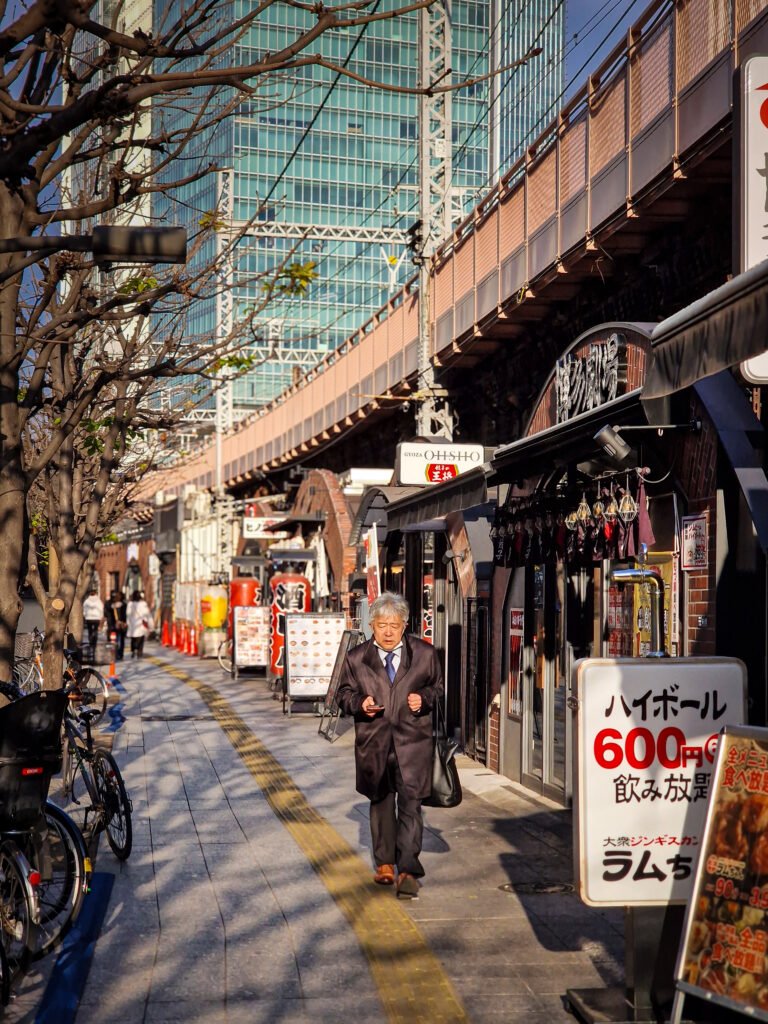
On the outskirts of Ginza, tucked among small restaurants and bars beneath the train tracks, is Kajiya Bunzo. This is our first truly authentic Japanese dining experience, with the trains rumbling overhead as a constant background soundtrack. The restaurant’s facade is covered entirely in Japanese characters, but there are pictures of the food and a sign advertising an English menu. With a Google rating of only 3.7, we probably never would have gone inside if we had looked the restaurant up beforehand.
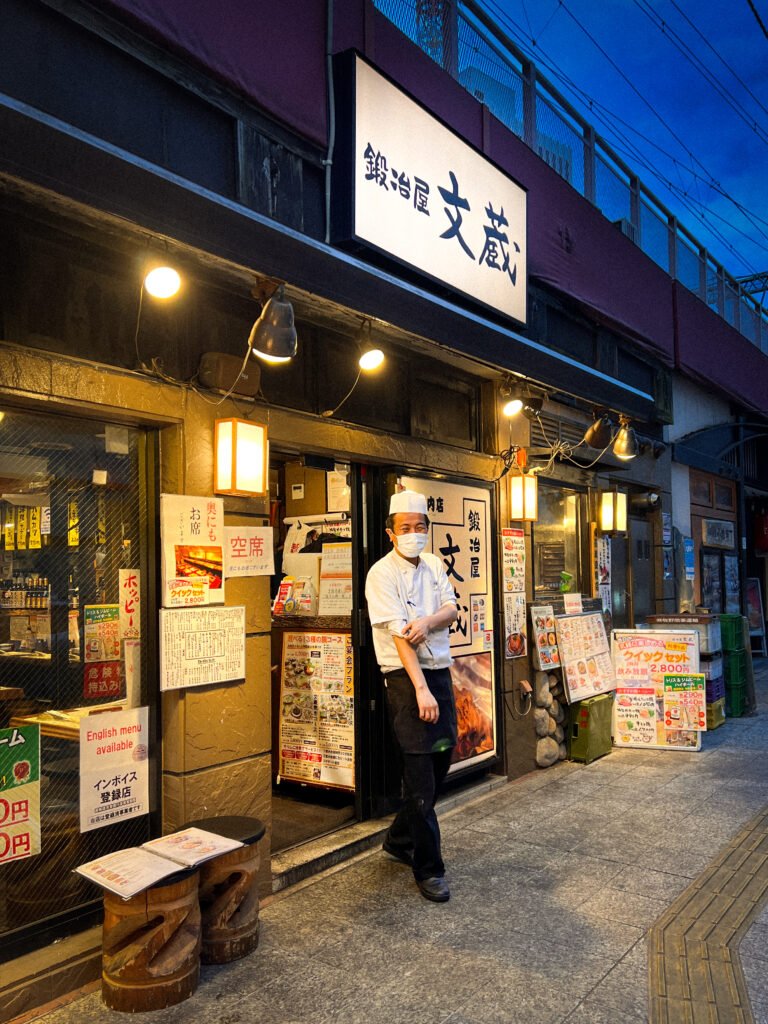
The restaurant charges a table fee, just like many Japanese restaurants. In return for the extra charge, we receive a small appetizer. It consists of a small bowl of clams – something we would never have ordered ourselves, but which turns out to be surprisingly delicious. We order our main dishes from an English menu and eat in silence while the trains make the entire restaurant vibrate.
A few minutes later, a plate of yakisoba arrives in front of us, stir-fried noodles topped with aonori, dried seaweed, and karaage, Japanese-style fried chicken served with shredded cabbage.
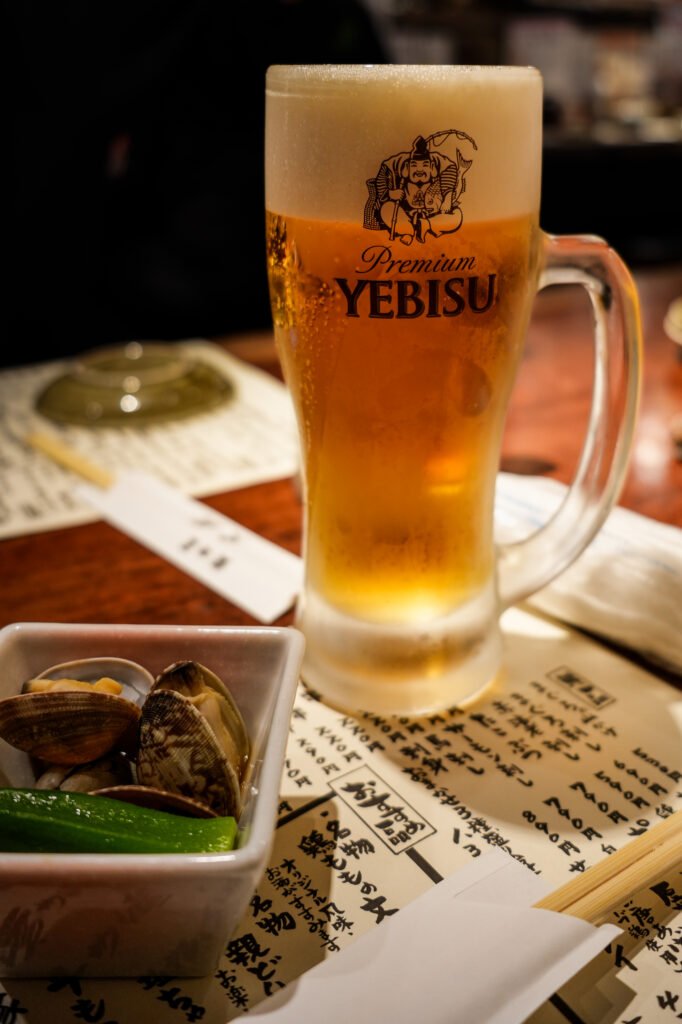
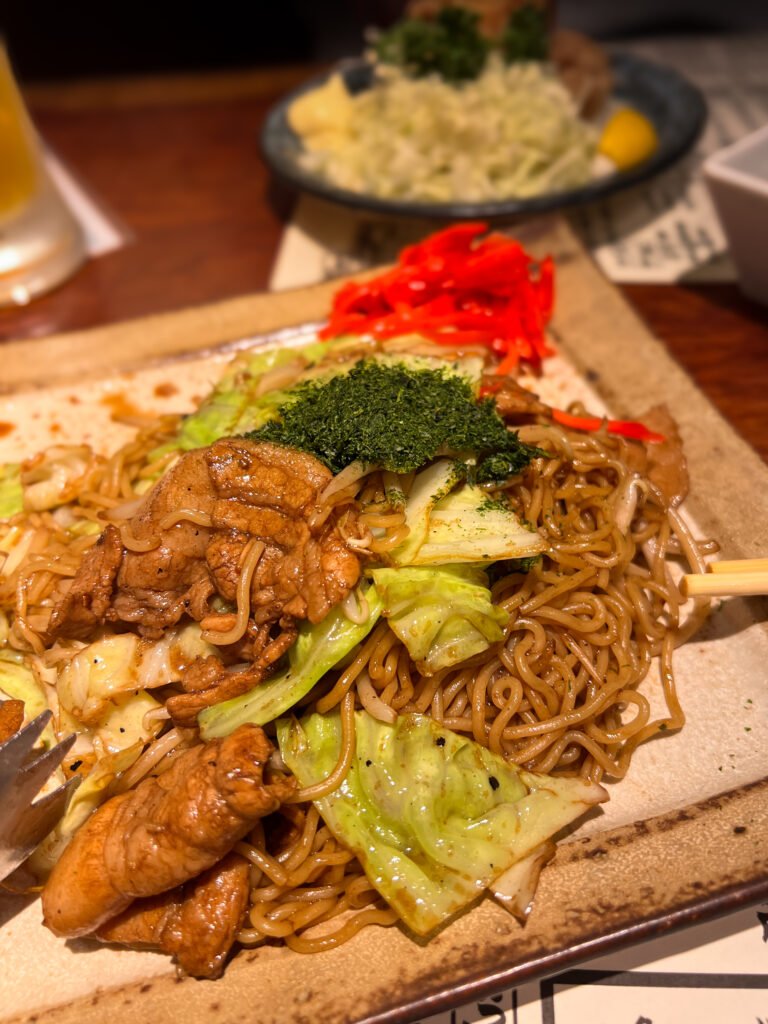
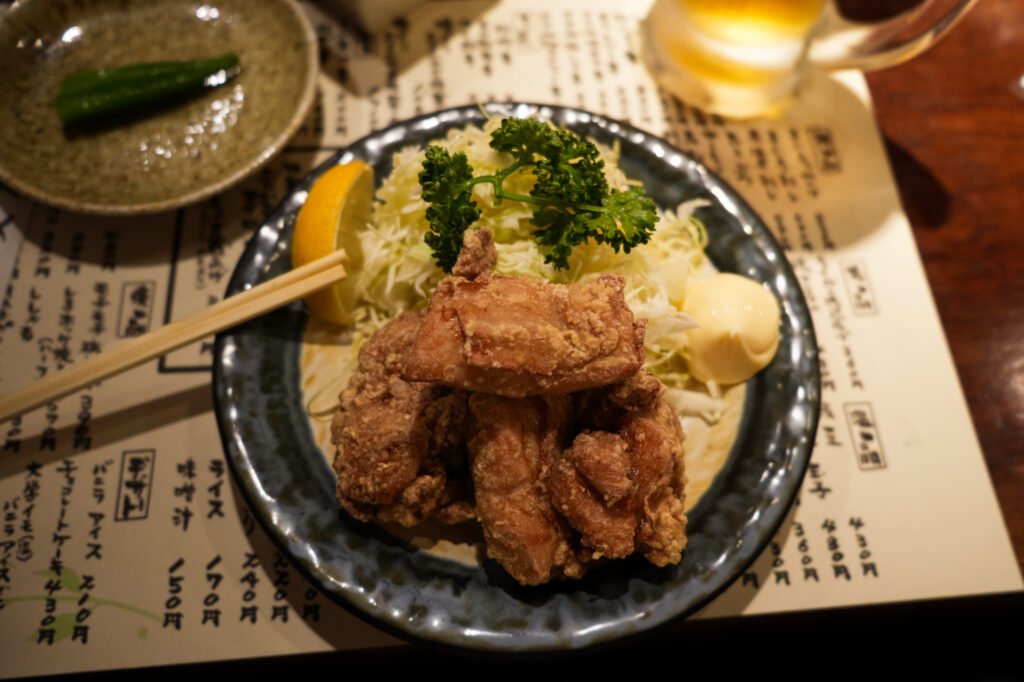
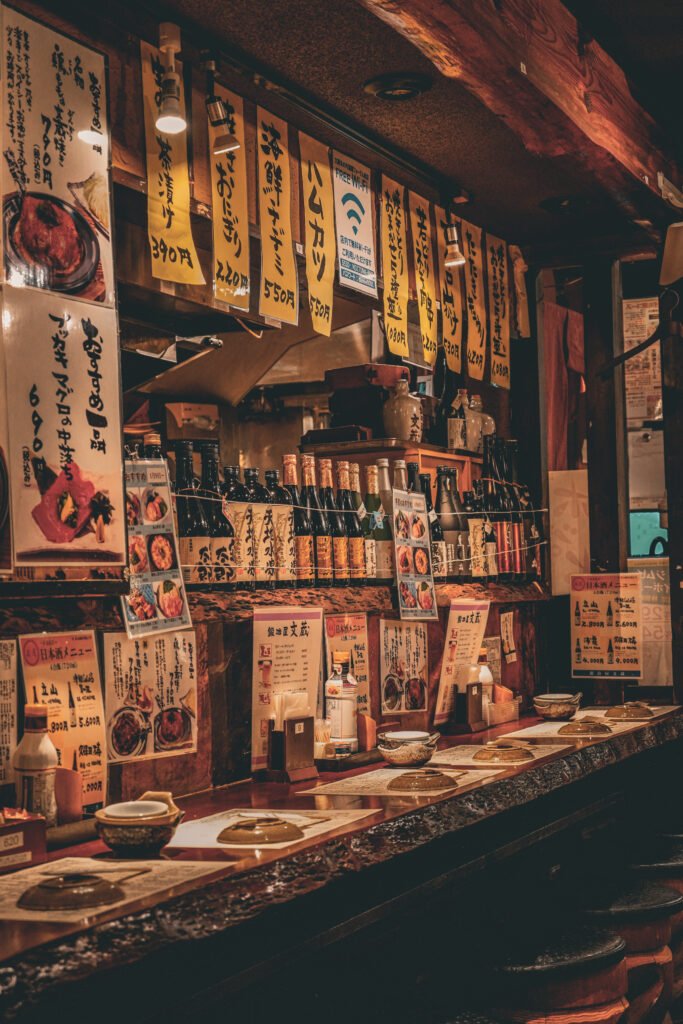
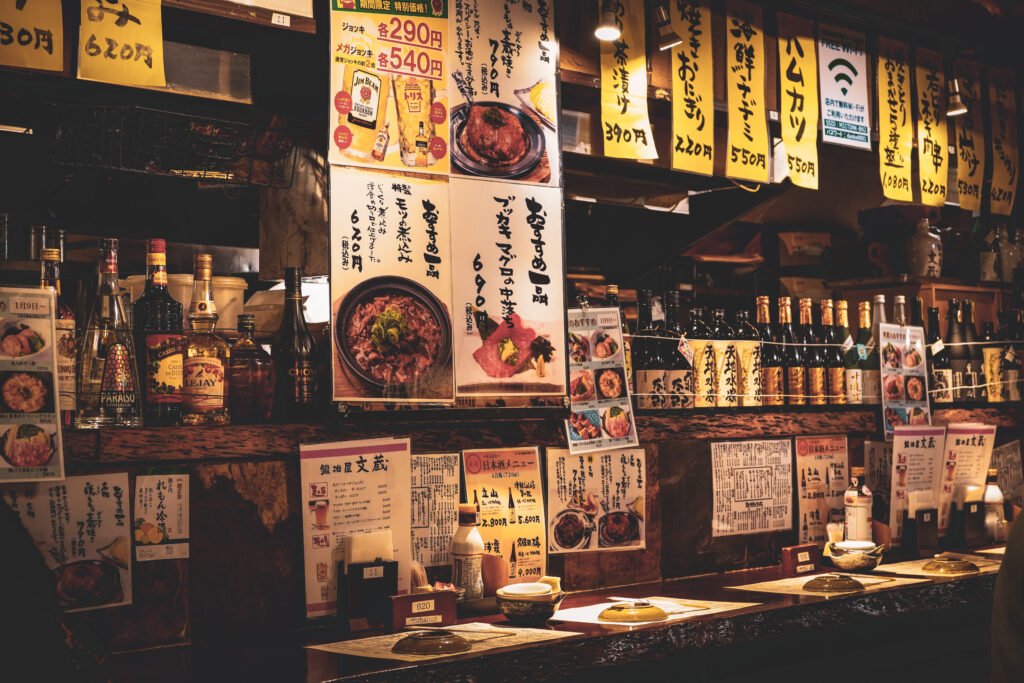
The food is prepared behind the counter, which is decorated with sake bottles, Japanese menus and pictures of the dishes being served. Everything is incredibly delicious, and the restaurant’s low Google rating is yet another reminder of just how high the standard of food can be in Japan. Even restaurants with low ratings can be worth visiting.
So don’t blindly follow Google reviews, long queues outside restaurants, TripAdvisor’s top-rated restaurants or other travel blogs. Maybe you will discover the next hidden gem the next time you dare to walk into a restaurant without checking the reviews first.
Ginza is known as Tokyo’s most exclusive district. But for us, it wasn’t about designer handbags, Michelin-starred restaurants or luxury hotels. Instead, it became about standing bars, noodles beneath the train tracks, rainy backstreets and beer mixed with tomato juice in basement bars.
Maybe that is exactly why we remember Ginza so well. It isn’t the luxurious shopping streets that make us want to return, but the unexpected – the standing bars, the rain-soaked backstreets and the trains rumbling overhead while we eat dinner.