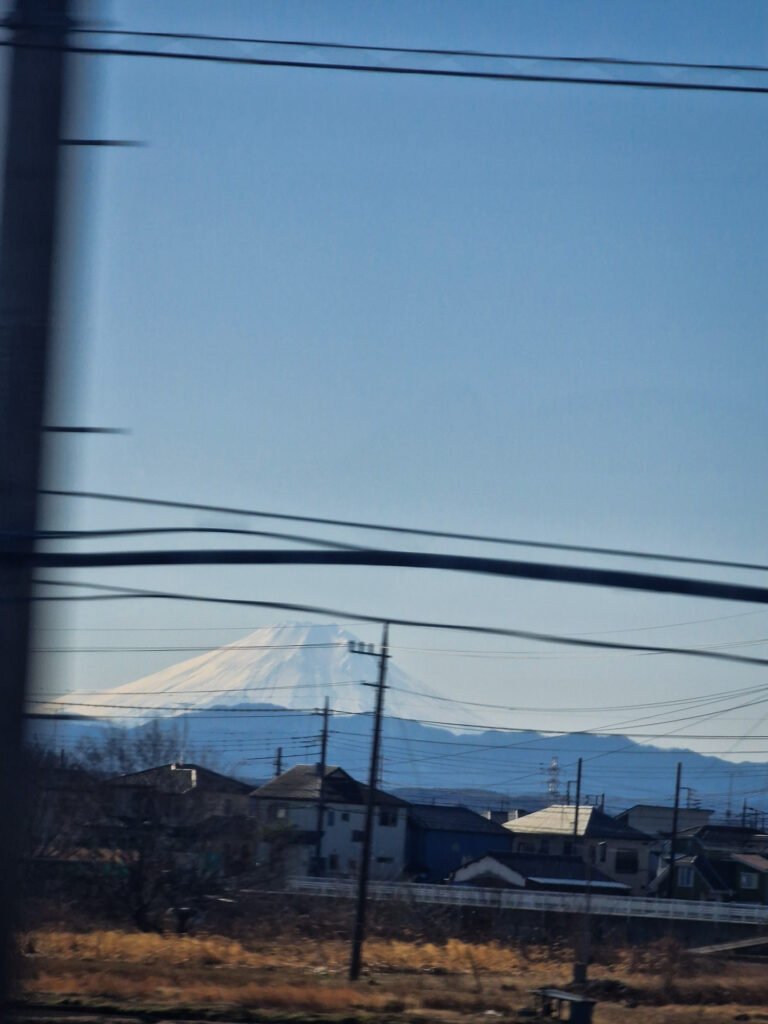
It is a clear winter day, and Mt. Fuji towers behind Tokyo’s outer suburbs. The Highway Express bus leaves Shinjuku Station in Tokyo and heads west towards the Japanese Alps, following the city’s network of highways. The ticket costs 4,800 Japanese yen per person.
The bus continues from one suburb to the next. It feels as though we never actually leave Tokyo. The city stretches for miles in every direction, making room for the 35 million people who live here. We pass construction cranes and building sites hidden behind screens, where new high-rises are taking shape.
The journey begins along busy streets, but before long we are travelling along one of the elevated expressways, looking down at the traffic below.
We catch glimpses of Japanese families inside their compact homes on the fifth and sixth floors of the high-rises we pass. The further we get from the city centre, the lower the buildings become, and the city starts to feel less cramped and densely packed.
After four hours, we reach Nagano Station. There are no high-rises like those in Tokyo, and the city feels much smaller. The feeling is reinforced by the impressive snow-covered mountains rising around it. Our stay is brief, however, as we need to catch a connecting train that will take us further up into the mountains.
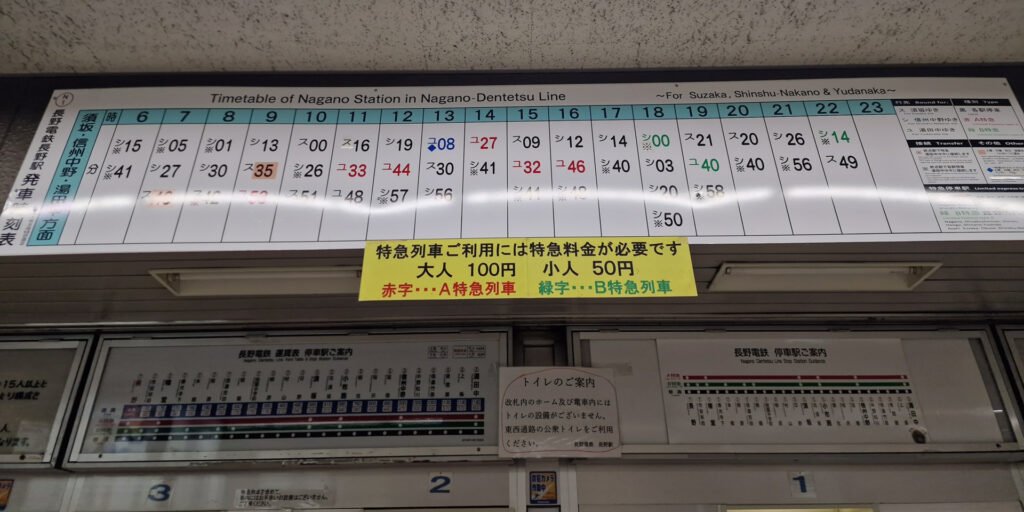
The Japanese characters on the ticket machines and platforms do little to make it easy to buy train tickets or find the right platform. Eventually, we manage to buy two tickets for 1,190 yen each. We breathe a sigh of relief – for about a minute. The express train requires an additional 100-yen supplement per person, something we only discover when we are stopped on the platform.
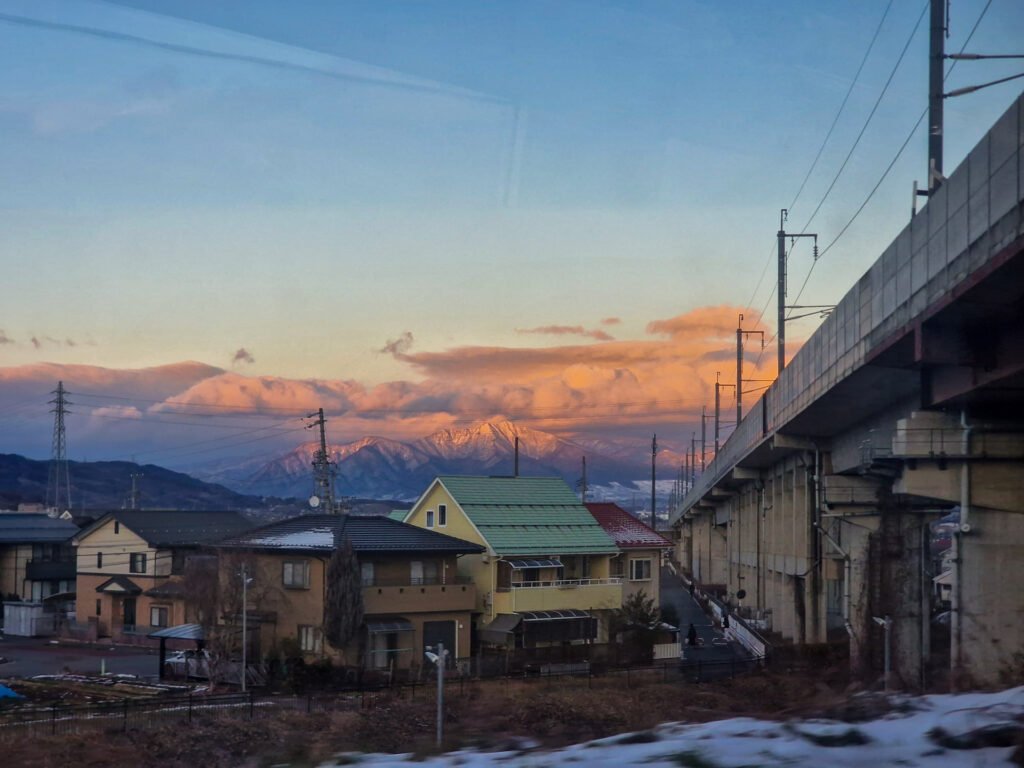
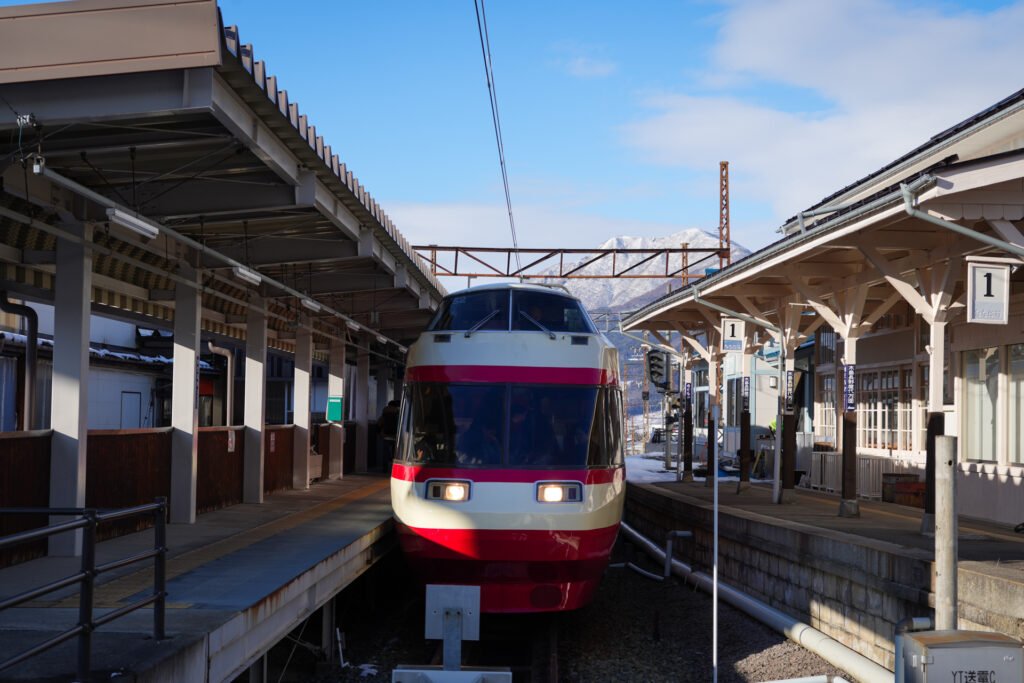
After a 70-minute train journey, we arrive in Yudanaka Onsen town. The walk up to our hostel takes us higher and higher into the mountain range – the same mountains that hosted the 1998 Winter Olympics.
We walk through cosy lanes framed by snow and covered in ice. Sulphur steam escapes from hollowed-out sections along the walls, naturally keeping the snow and ice at bay and filling the town with a faint sulphurous smell. Even so, parts of the road are covered in snow, and we carefully shuffle along the icy streets between the snowbanks, our heavy backpacks weighing us down.
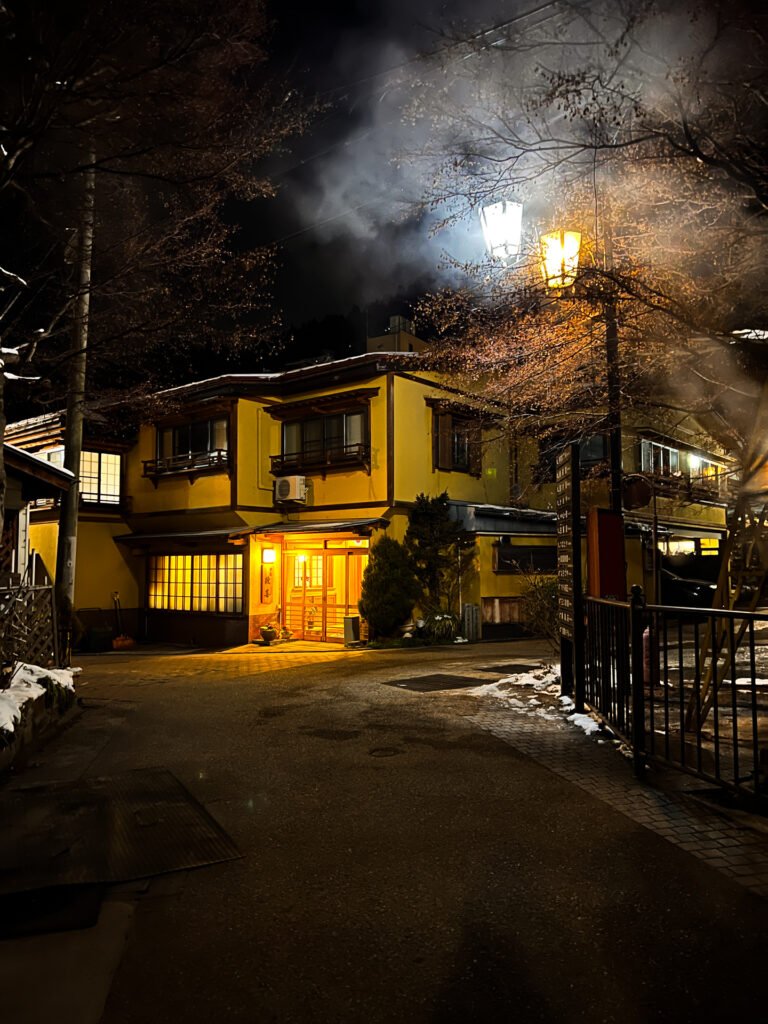
In true Japanese fashion, we start by leaving our shoes in the entrance hall and borrowing the hostel’s slippers before we can check in. One thing that worries both of us is the state of Daniel’s socks.
We have to pay a mandatory onsen fee to use the hostel’s onsen, something we initially have no intention of doing. But with no shower in our room and the mountain air feeling bitterly cold, using the onsen soon becomes unavoidable.
An older, friendly Japanese woman shows us to our room. It is a simple, traditional Japanese room that makes us feel as though we are staying in a small inn, a ryokan. We have to make our own beds, laying two futon mattresses on the floor so that it doesn’t feel quite as hard as sleeping directly on the tatami. The room is large enough to fit at least seven beds. Despite its size, it is one of the cheaper rooms in the village. The building is old, and like so many older houses in Japan, poorly insulated. The room feels absolutely freezing.
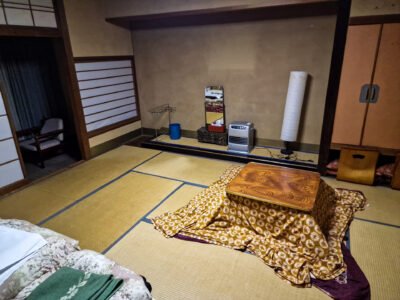
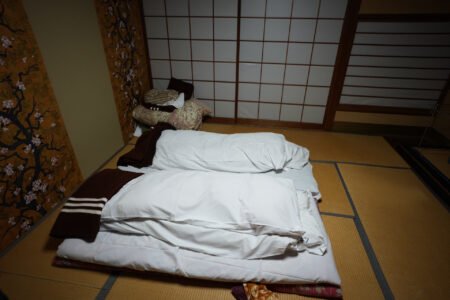
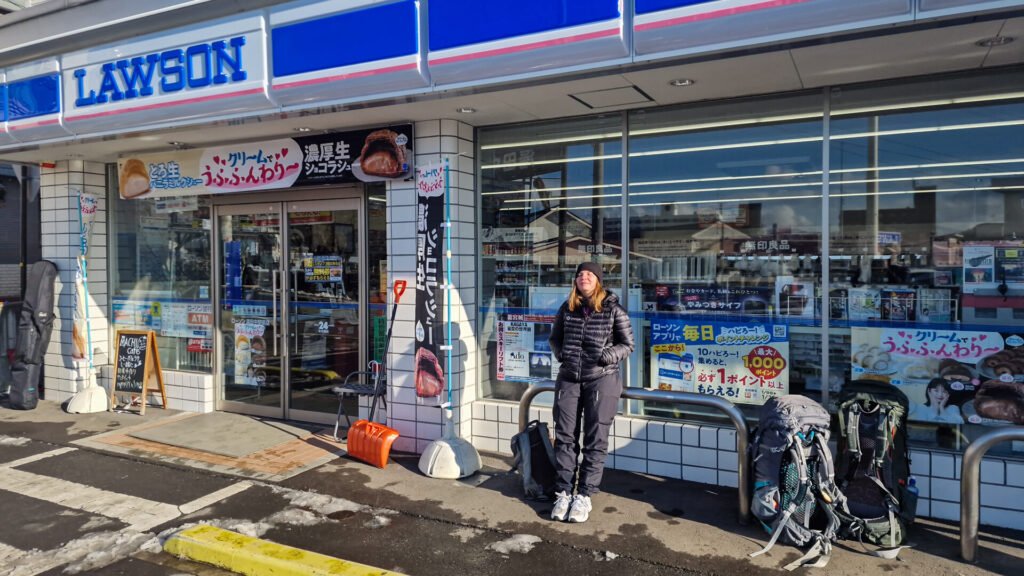
There is very little furniture. Apart from the mattresses, there is a small table with short legs, and we sit directly on the tatami mats while eating dinner. Our meal consists of the little we have found at the local Lawson convenience store and a small bottle of red wine we saved from the flight.
The room is getting seriously cold, and the thermometer shows only a couple of degrees above freezing. We wouldn’t even be surprised to wake up to frost inside the room. We tuck our feet further underneath the Japanese kotatsu table, a low table with a built-in heater and blanket that traps the warmth underneath.
When even that isn’t enough, we decide to take a walk through the village in the hope of warming up our frozen toes.
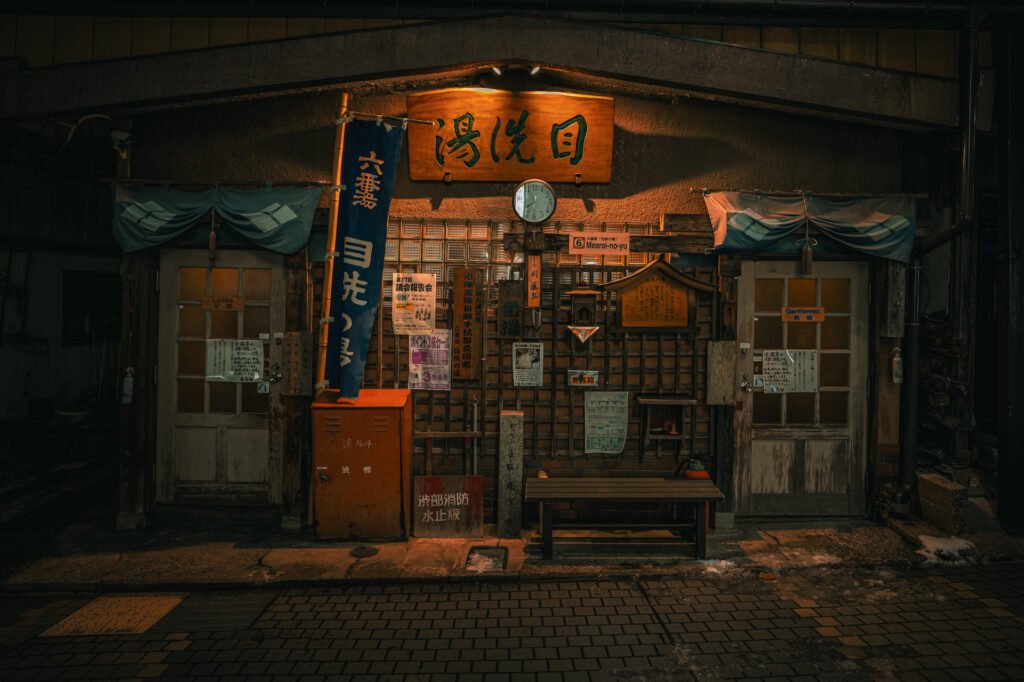
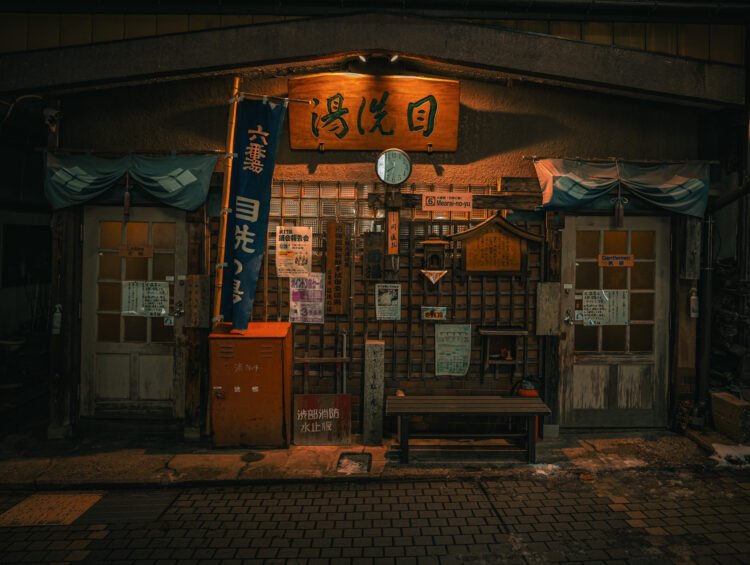
We walk through the village’s narrow lanes between traditional Japanese wooden houses. We pass several outdoor onsen that look very inviting from the outside. Most are locked and belong to nearby hotels, but we find one that is open and empty and sneak in to take a few photos.
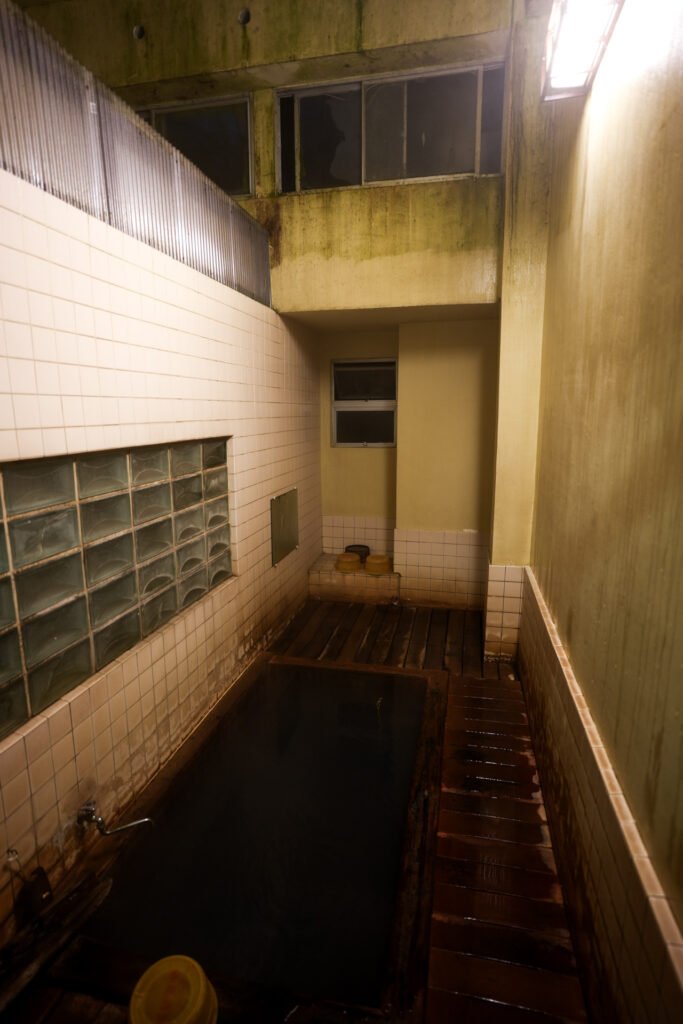
To our disappointment, the bathing water doesn’t look particularly inviting, and the tiles have turned brown from the steam. Along the streets, people walk around in yukata and geta, looking for available baths. We follow them for a while, but soon realise that our hostel is not part of any of the village’s hotel associations and therefore does not have access to most of the onsen.
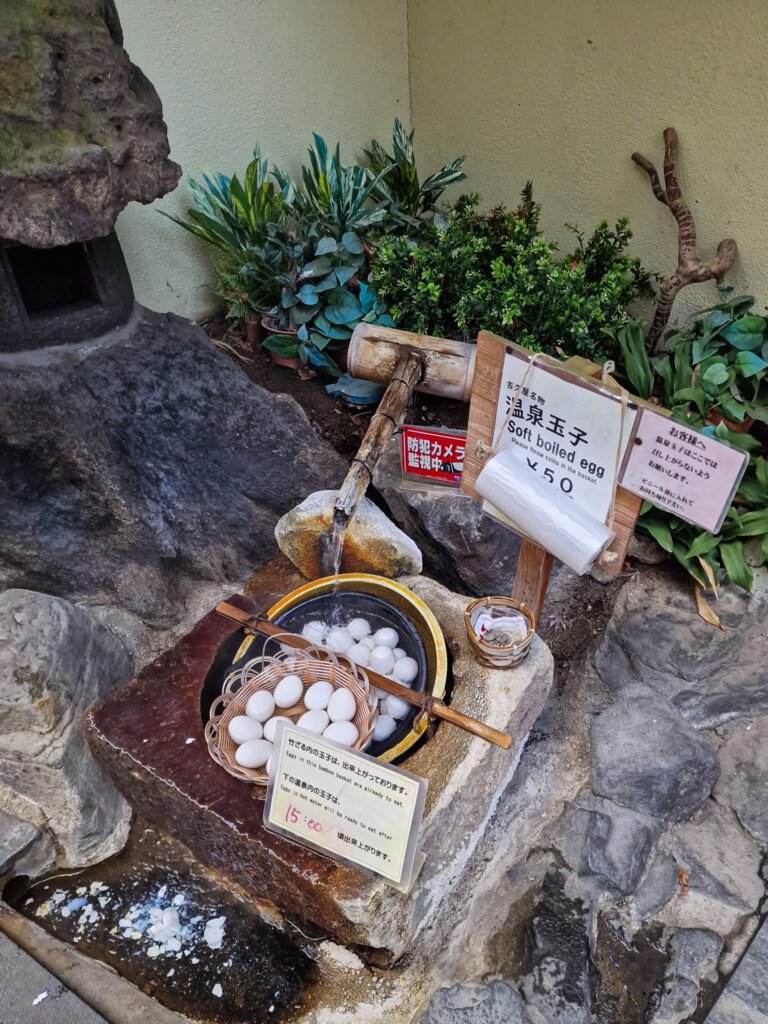
Instead, we pass small public foot baths where you can warm your frozen toes, and on one street corner eggs are being boiled directly in the hot springs. Steam rises between the houses, making the air feel heavy and warm despite the cold surrounding us.
After a chilly walk through the village, we head downstairs to try our hostel’s onsen. We are a little nervous, since we have never been in an onsen before. The men’s section is considerably larger, with a large open-air bath where you can sit beneath the night sky. The women’s section consists of only a small enclosed bath shared between the guests.
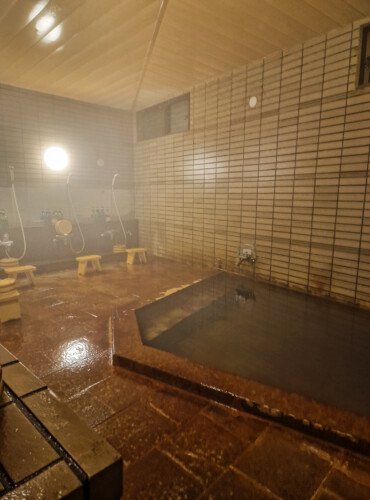
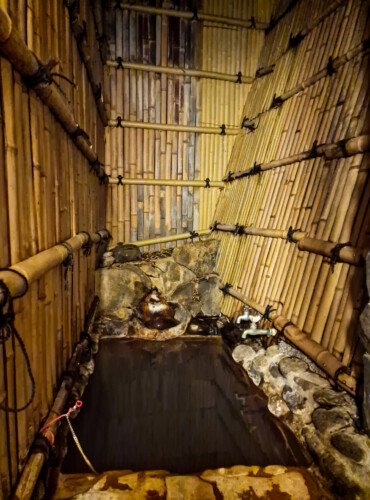
From the hot bath, Daniel can look up at the stars and catch glimpses of hotel windows glowing in the darkness. In some of them, guests can in turn catch a glimpse of the naked men bathing through the steam.
Your first time in a Japanese onsen can be a culture shock, even for the most well-travelled visitor. The entrance to the changing rooms is decorated with noren, curtains in blue for men and red for women, usually marked simply with the Japanese characters 女 (woman) and 男 (man).
In the changing room, you leave your yukata, a traditional Japanese cotton robe, and geta (下駄), Japanese wooden sandals, in a basket along with your other belongings. The only things you can take into the bath are a small hand towel and your toiletries – not even your larger bath towel is allowed in the bathing area.
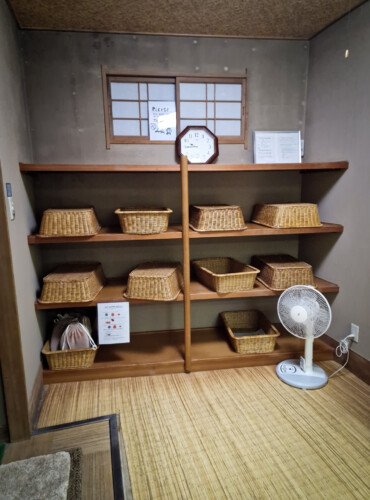
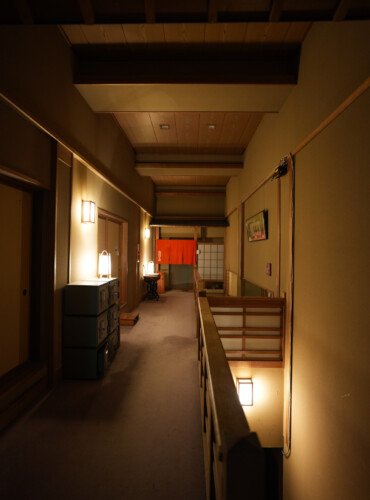
The small hand towel can be used to cover your private parts, although it is really too small to do much of a job. Before entering the bath, you have to wash yourself thoroughly in the traditional Japanese way.
Luckily, we are not completely unfamiliar with the concept, having previously visited Yasuragi, the Japanese spa in the Stockholm archipelago.
We sit down on one of the small plastic stools in front of the taps, with each washing station separated by a small wall that creates the illusion of privacy. We fill our buckets with water and pour it over ourselves, letting the dirt and stress wash away.
We wash ourselves thoroughly with soap and rinse the stool before moving on to the bath.
The water is shockingly hot when we first get in, and it takes a while to adjust to the heat. Water trickles into the bath, and the smell of sulphur almost makes us dizzy, although the heat itself may have something to do with that. Some onsen can reach temperatures of 60–70°C. We fold the small hand towel and place it on our heads while sitting in the bath.
Despite the fact that your first experience in an onsen can be stressful, it is one of the most relaxing things you can do in Japan. And if you look unsure of what to do, someone will often come over and show you, without saying a word of English, simply with a smile.
It is something Marika will experience again and again during our countless visits to Japanese onsen.
One night is far too short to spend in one of Japan’s most beautiful onsen towns, nestled among ancient forests deep in the Japanese Alps.
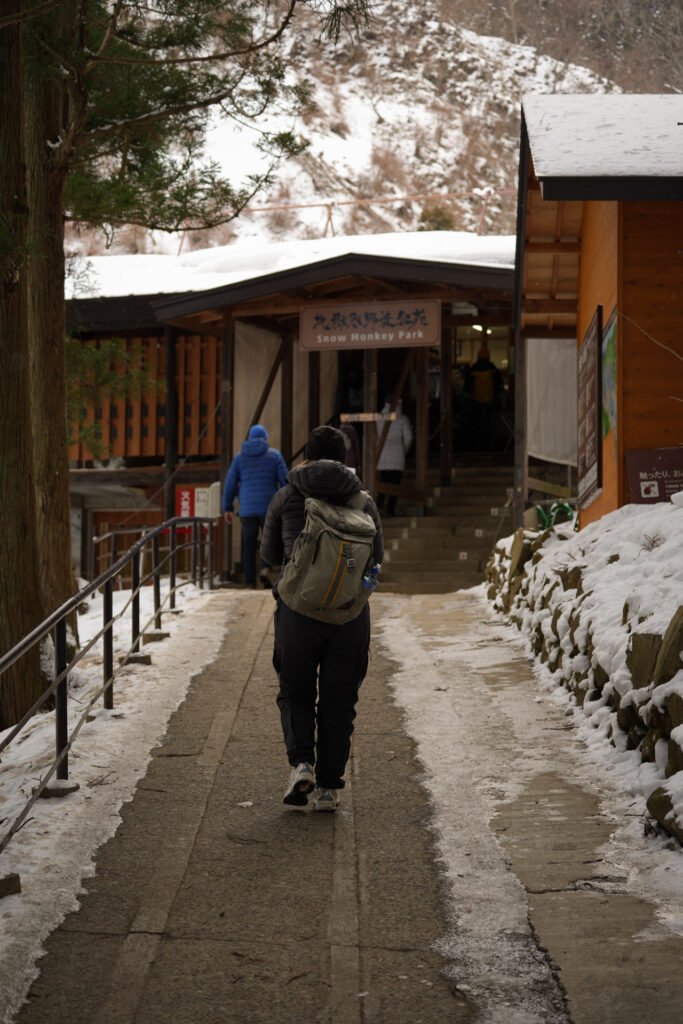
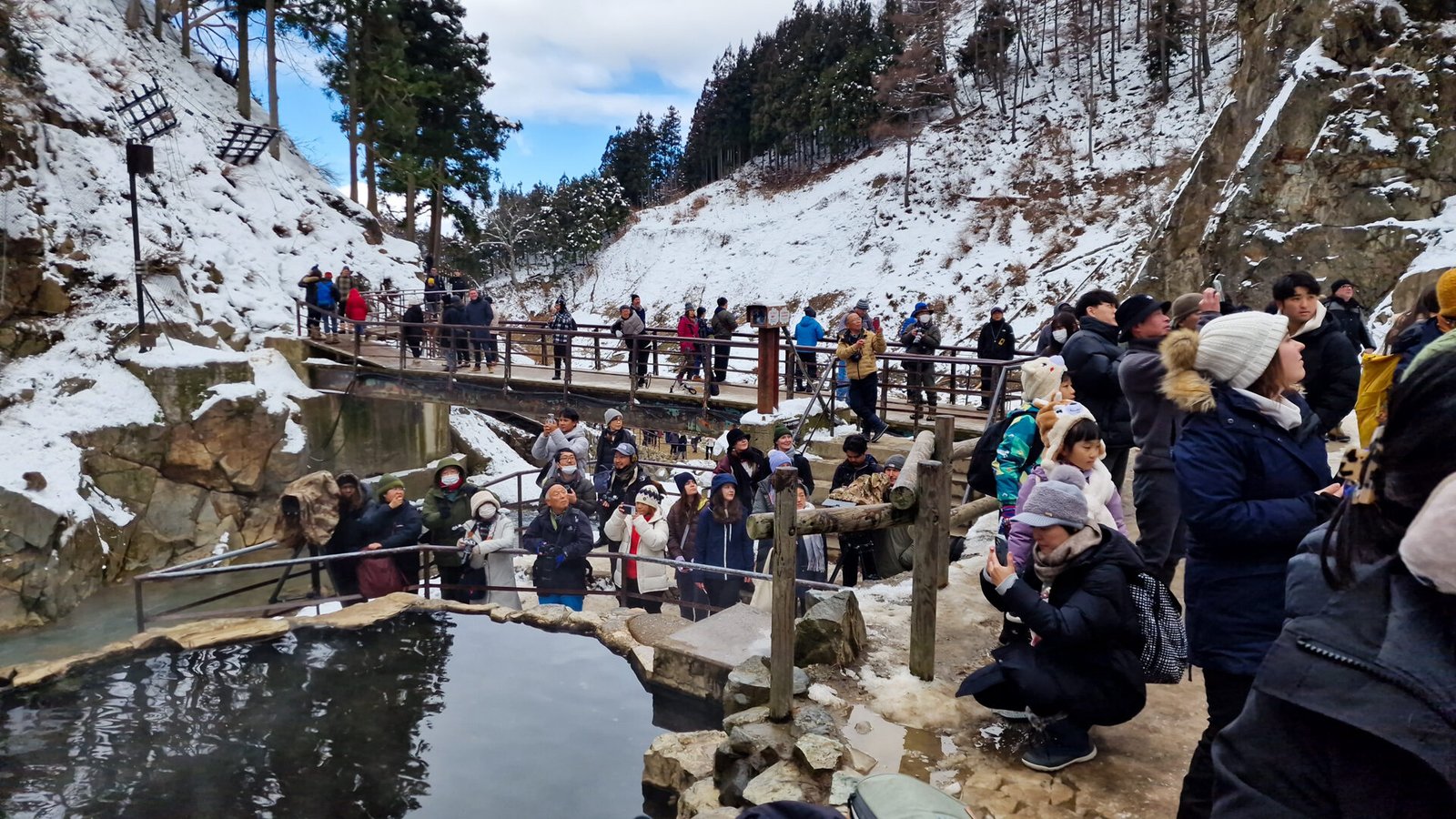
From our hostel in Yudanaka, it is about an hour’s walk to Snow Monkey Park. To see the Japanese macaques warming themselves in the hot springs high in the mountains, you have to pay 800 yen per person.
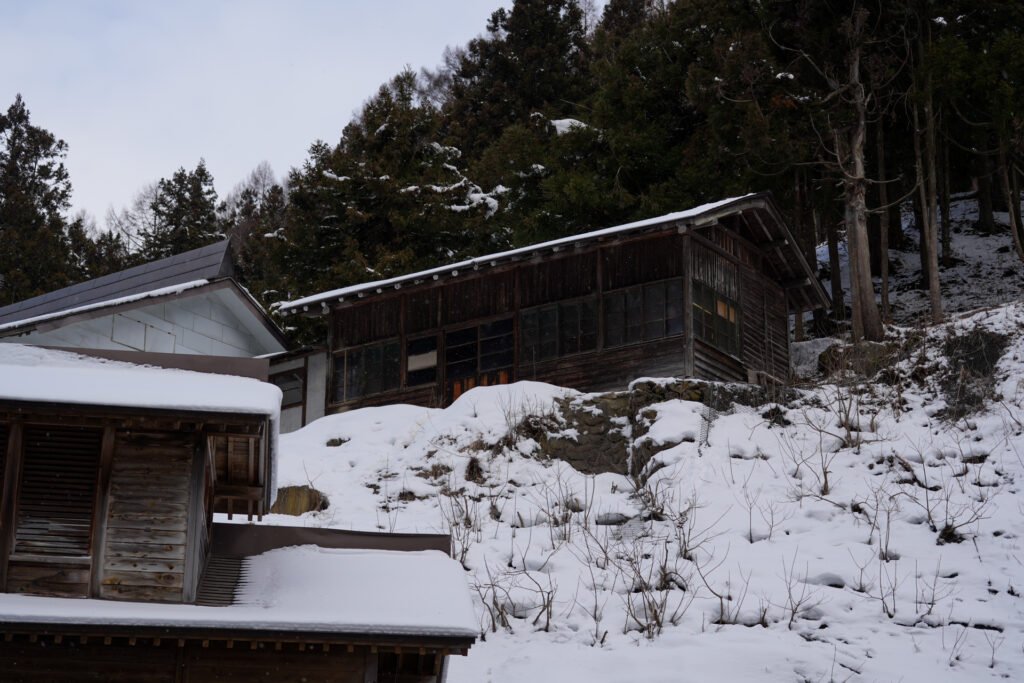
Hundreds of monkeys bathe in the hot springs or play in the snowdrifts. When the snow starts to fall, it is possible to capture incredibly beautiful photographs of them sitting in the steaming water as snowflakes drift down around them.
They are less idyllic when they climb out of the bath, their fur wet and dishevelled. The monkeys are fed by the park rangers, which means they are not particularly shy and are happy to put on a show in front of the cameras.
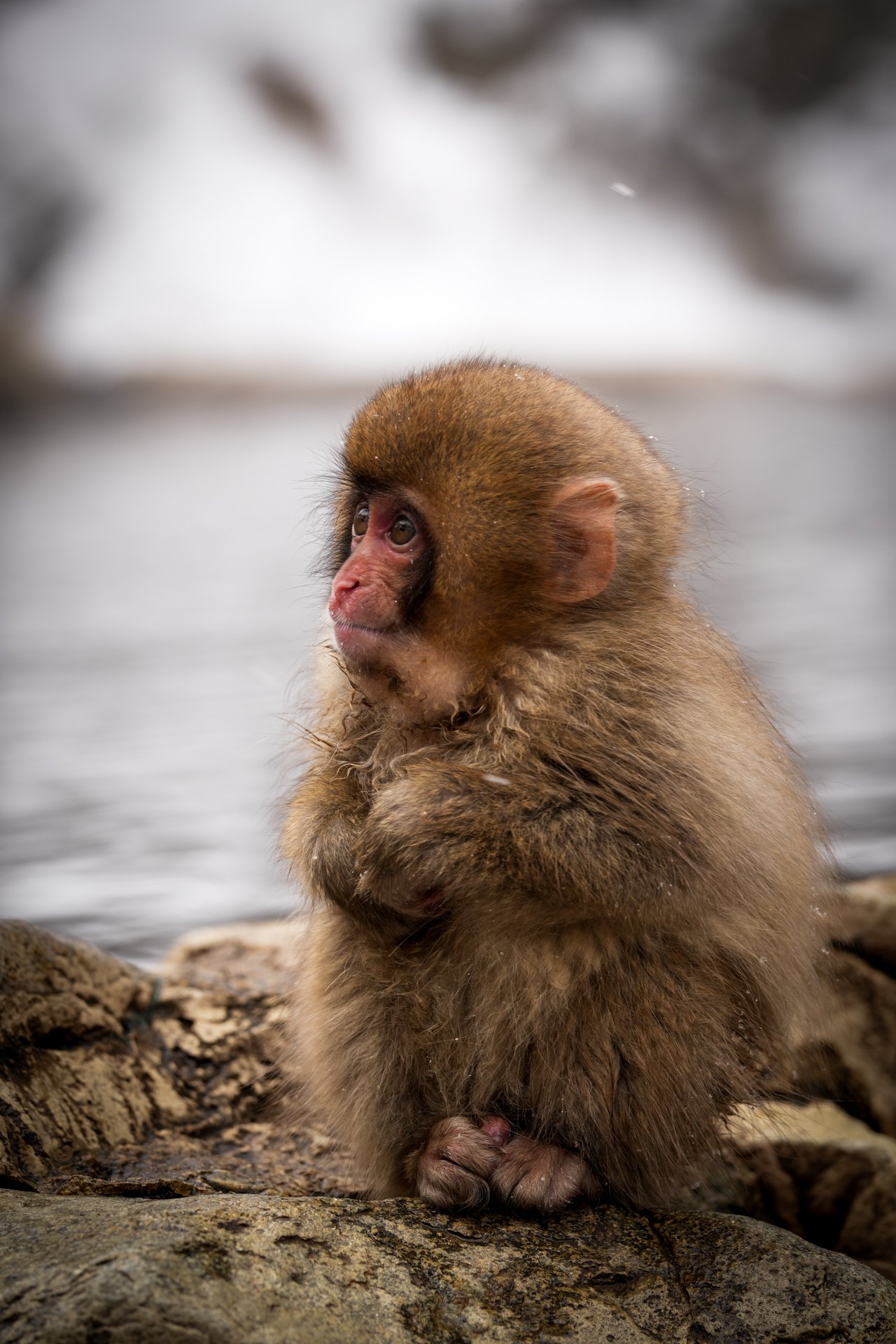
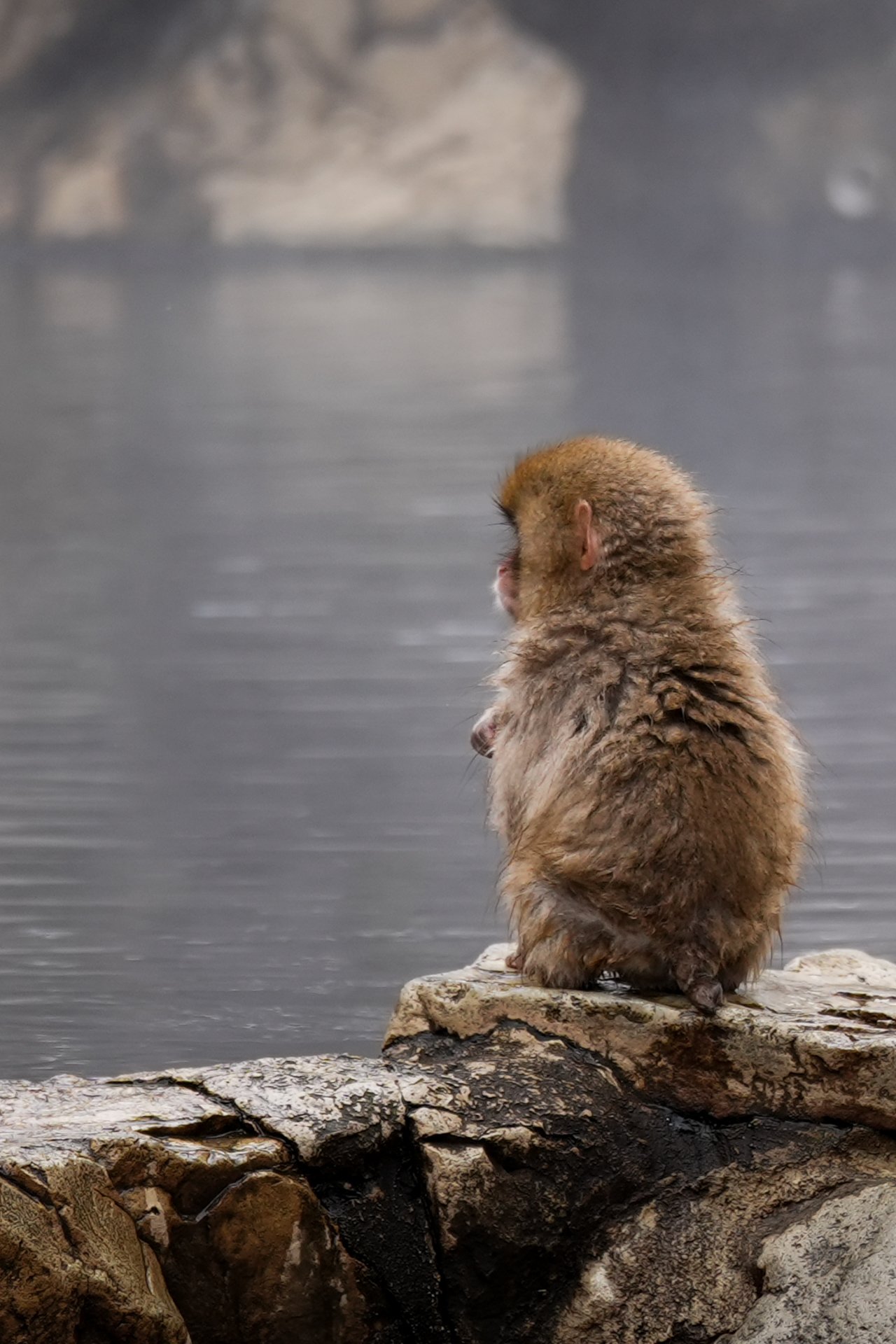
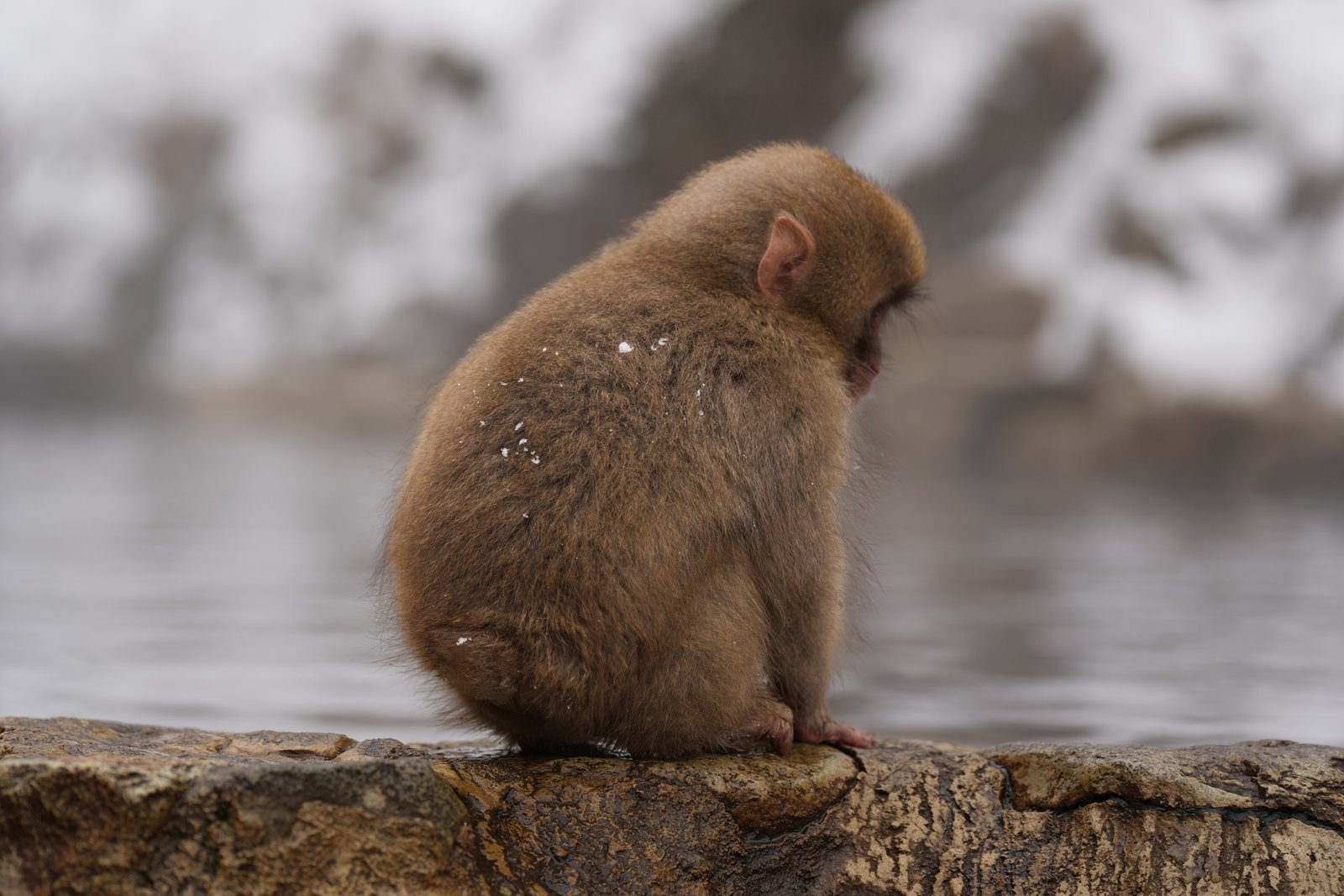
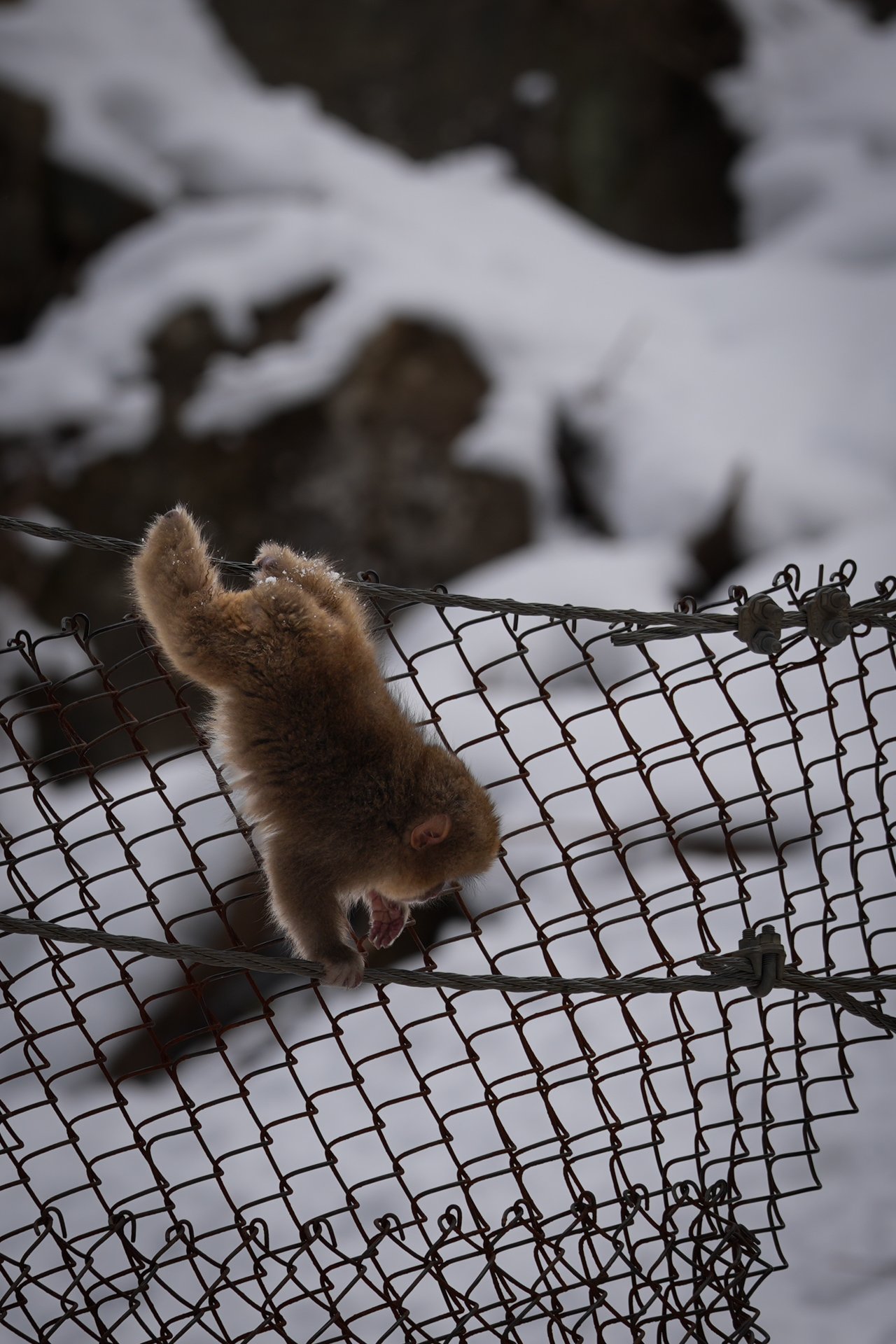
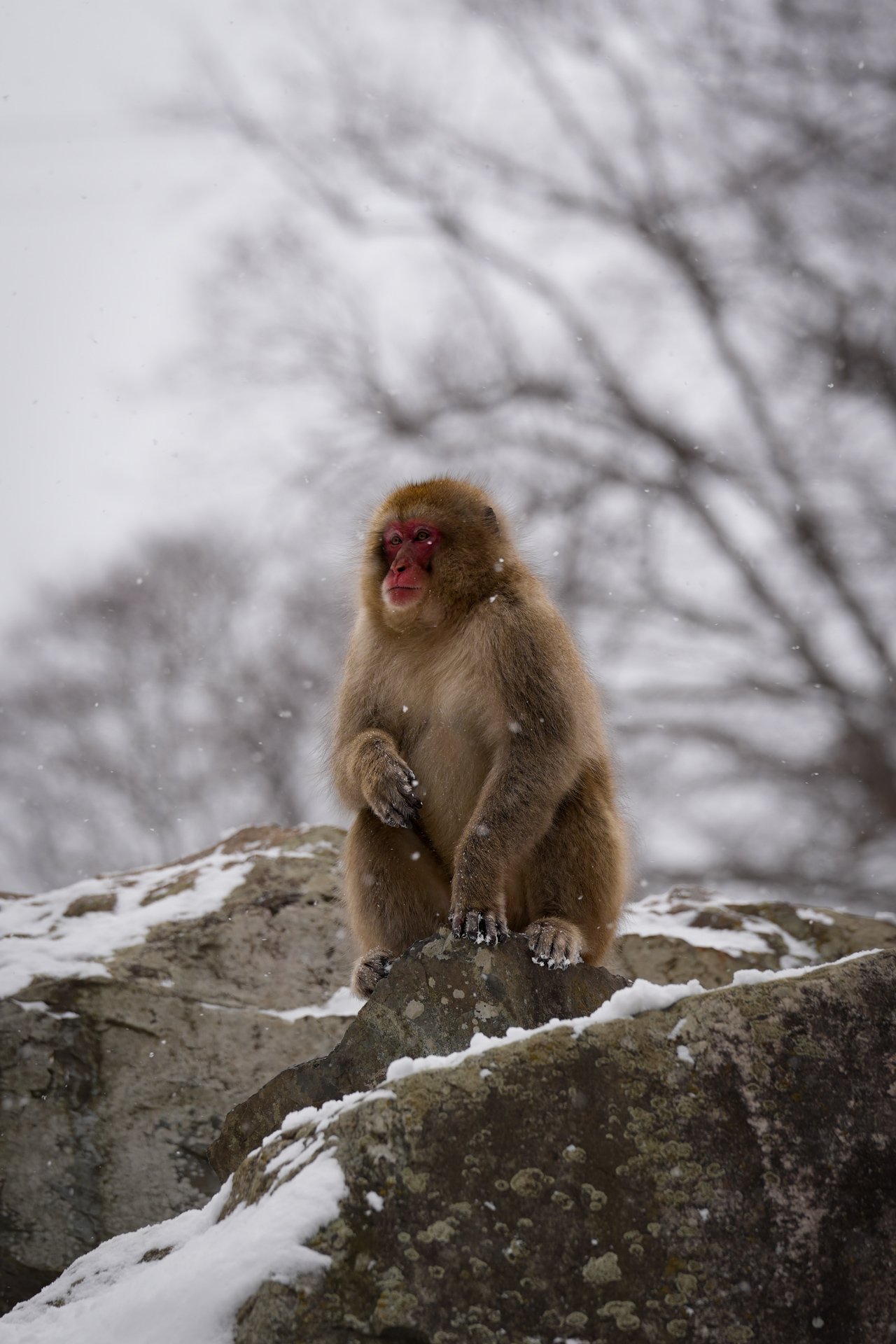
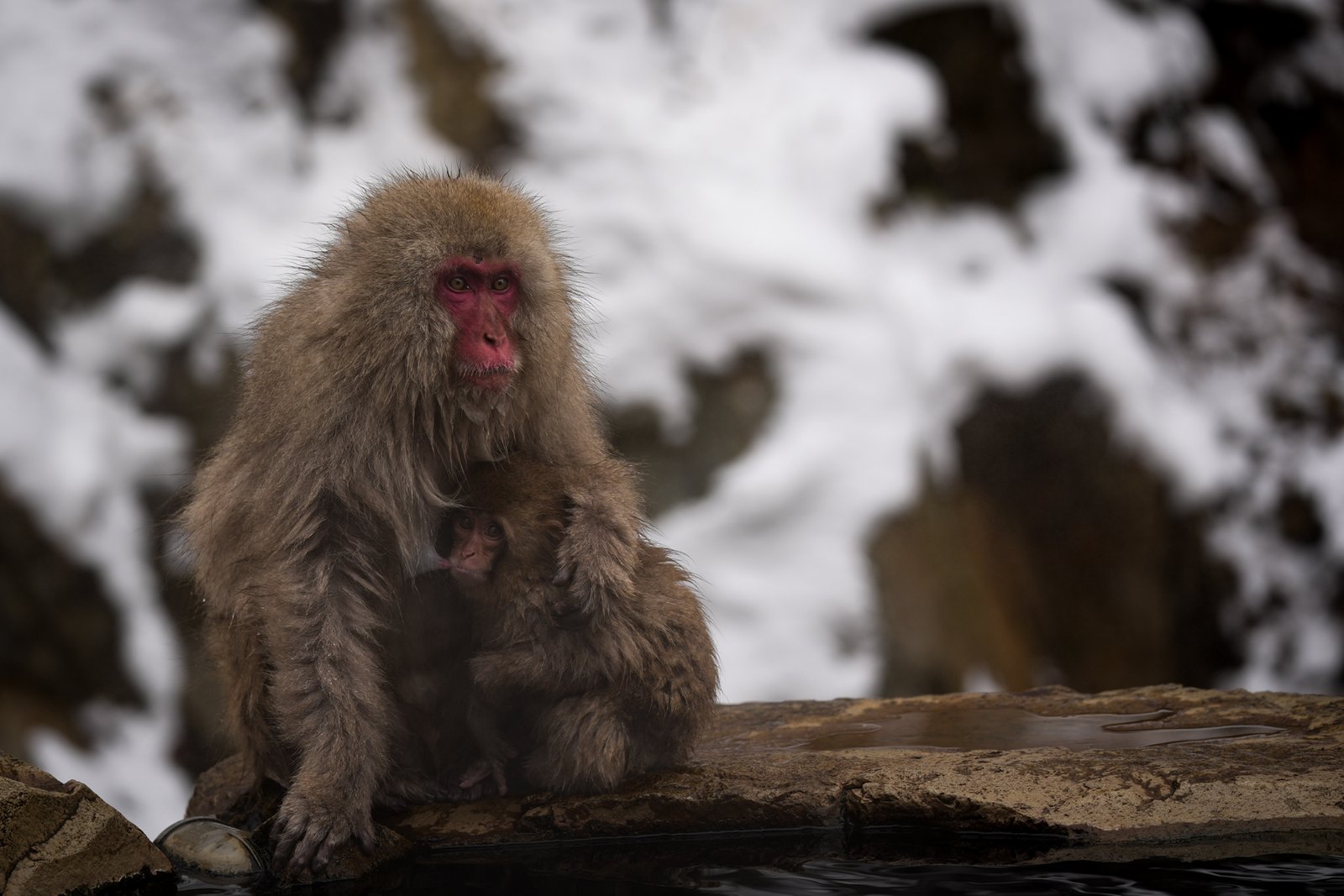
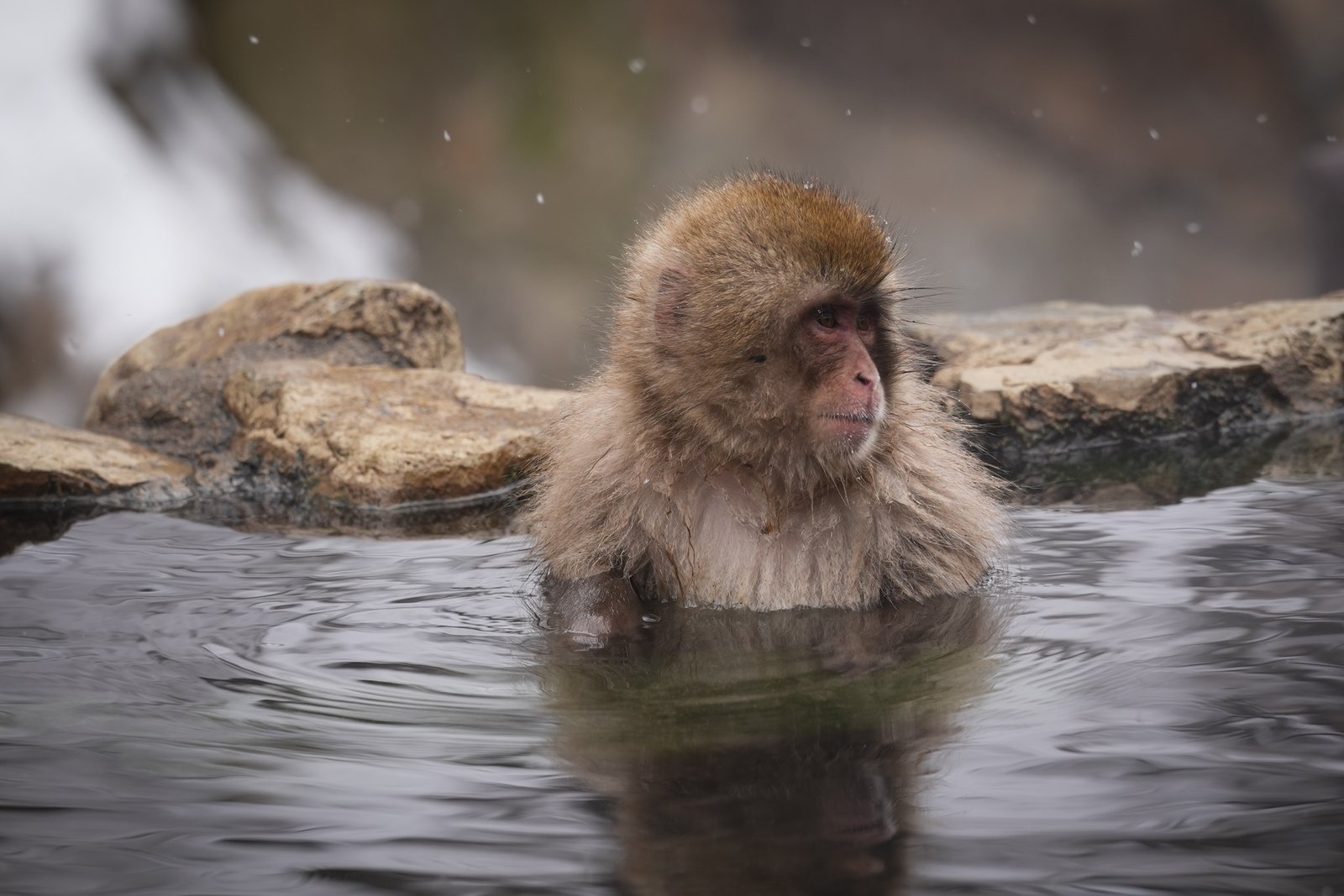
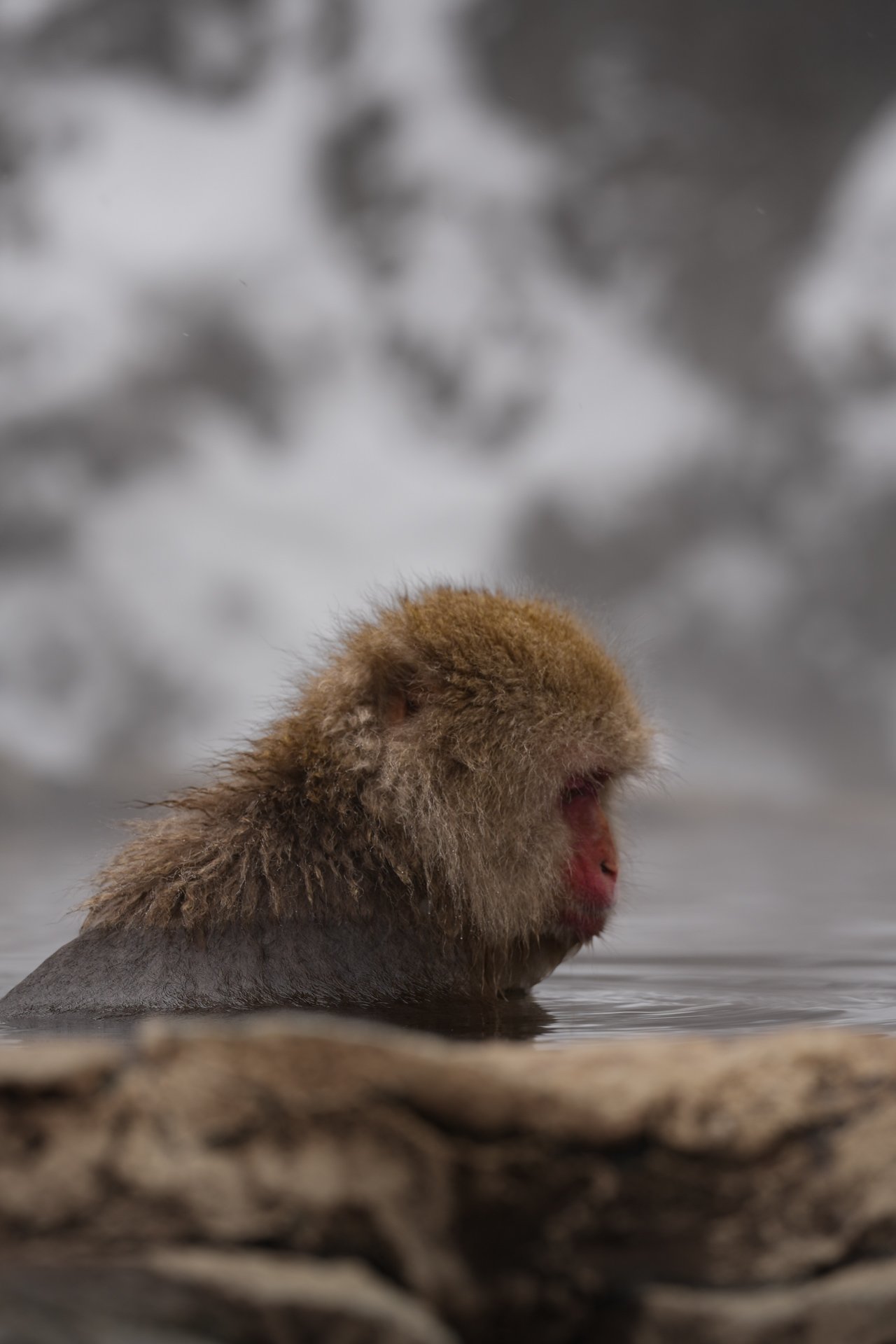
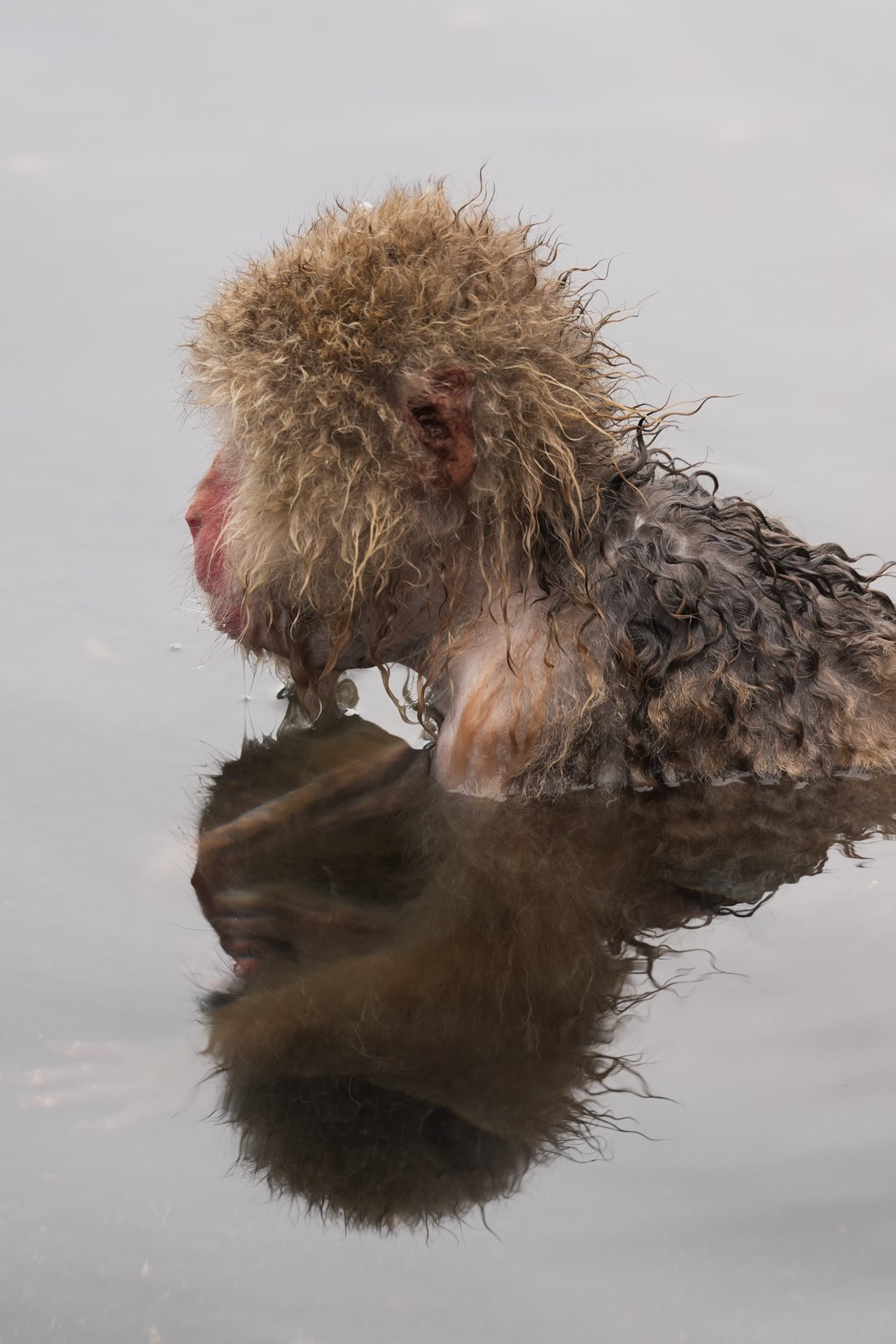
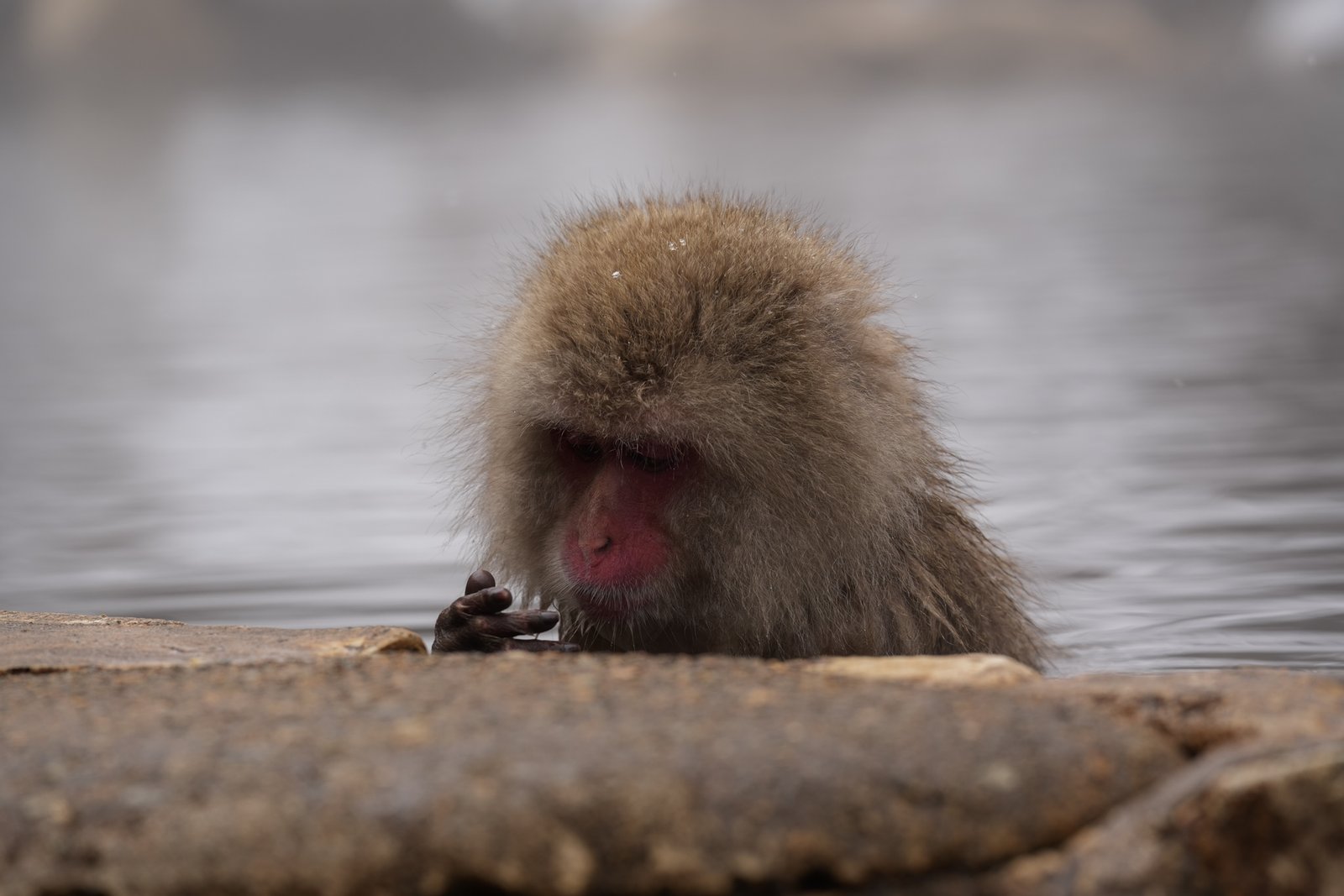
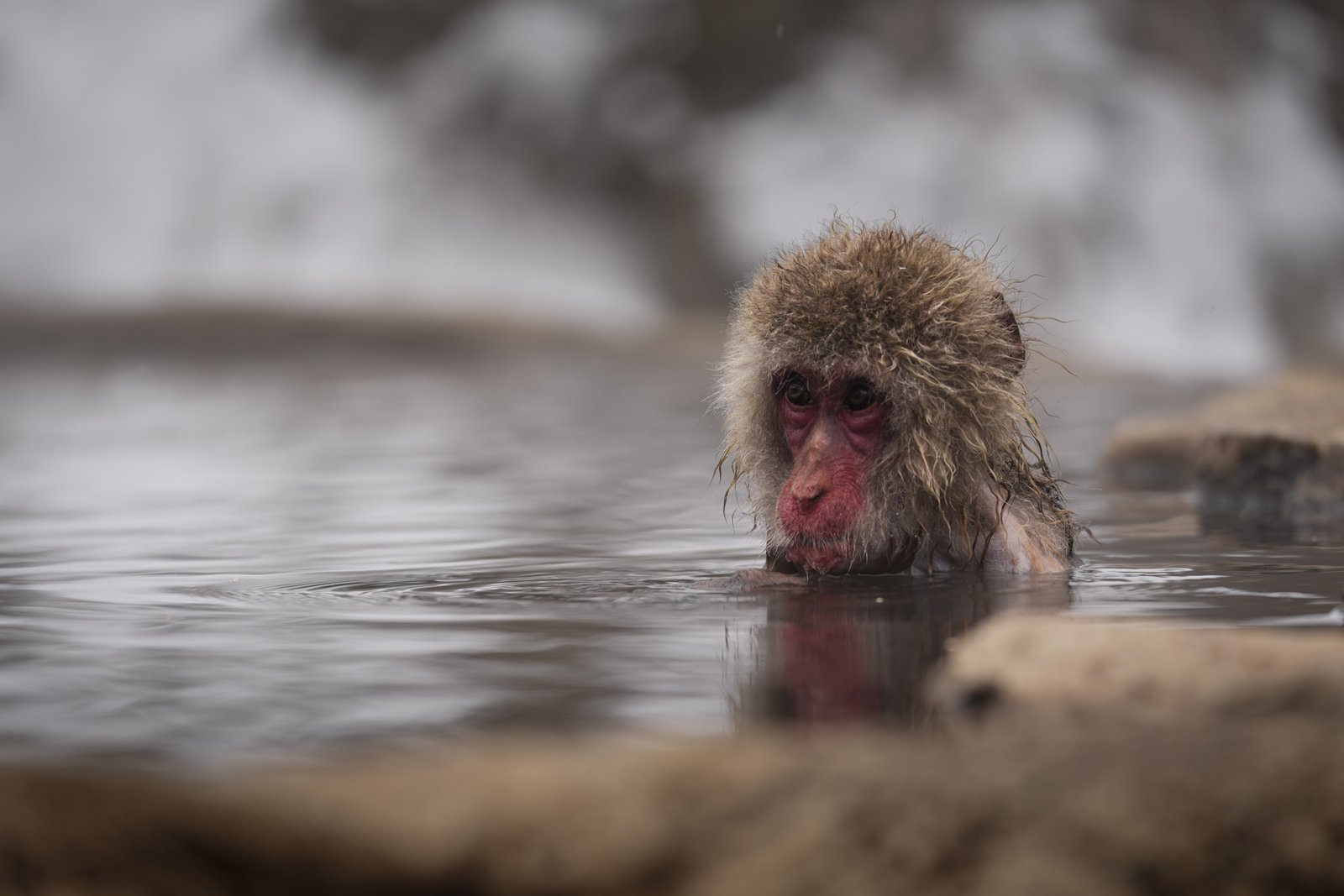
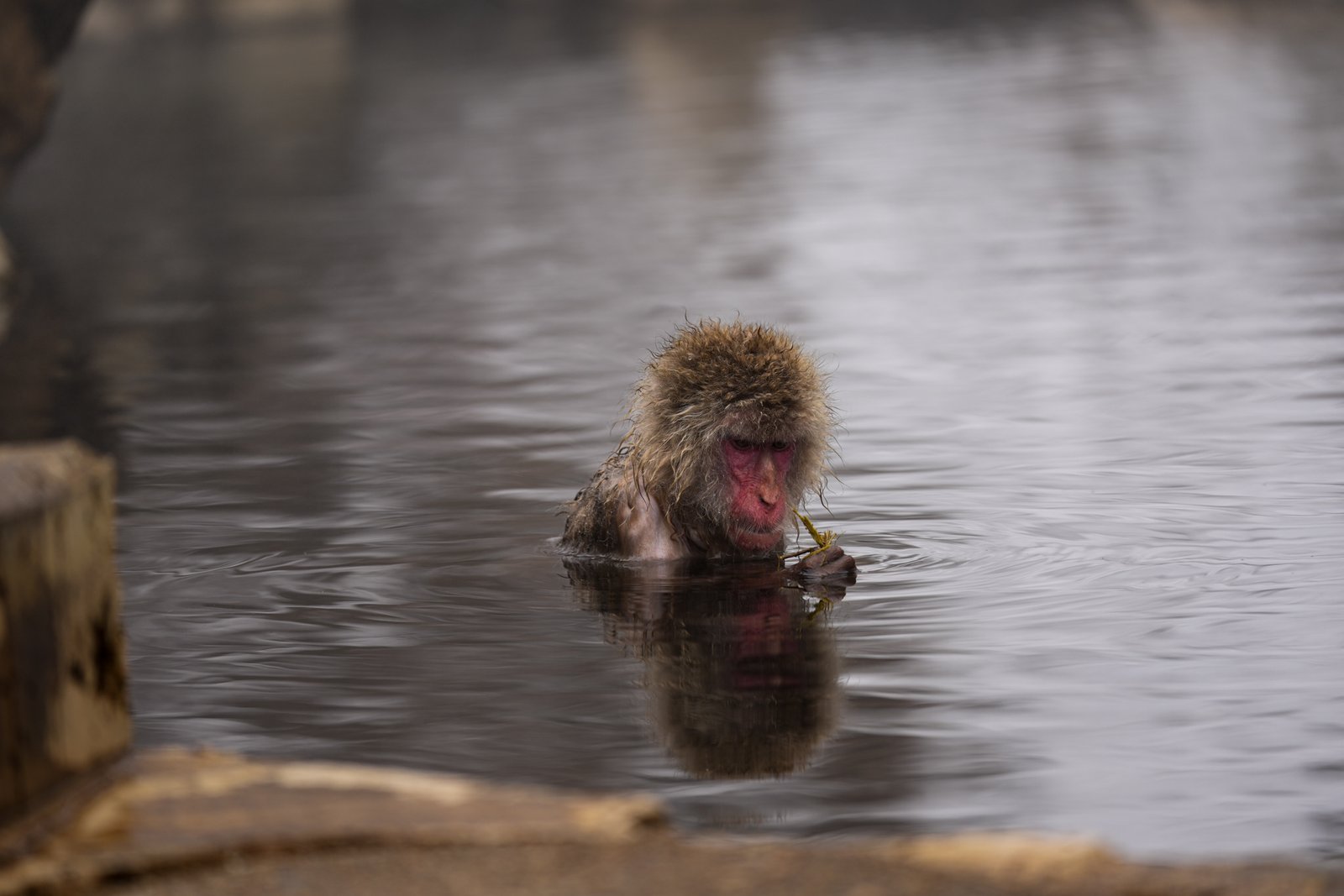
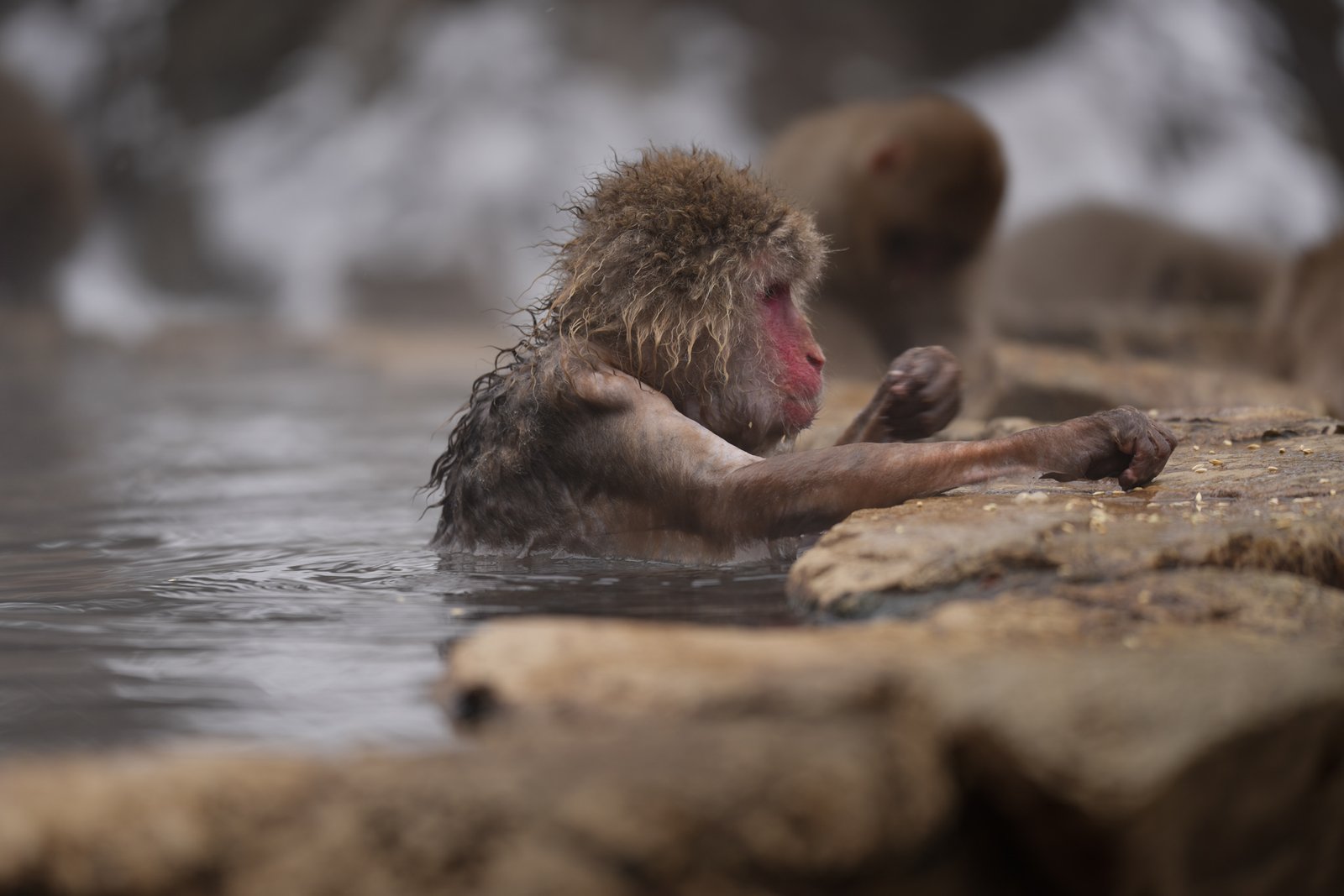
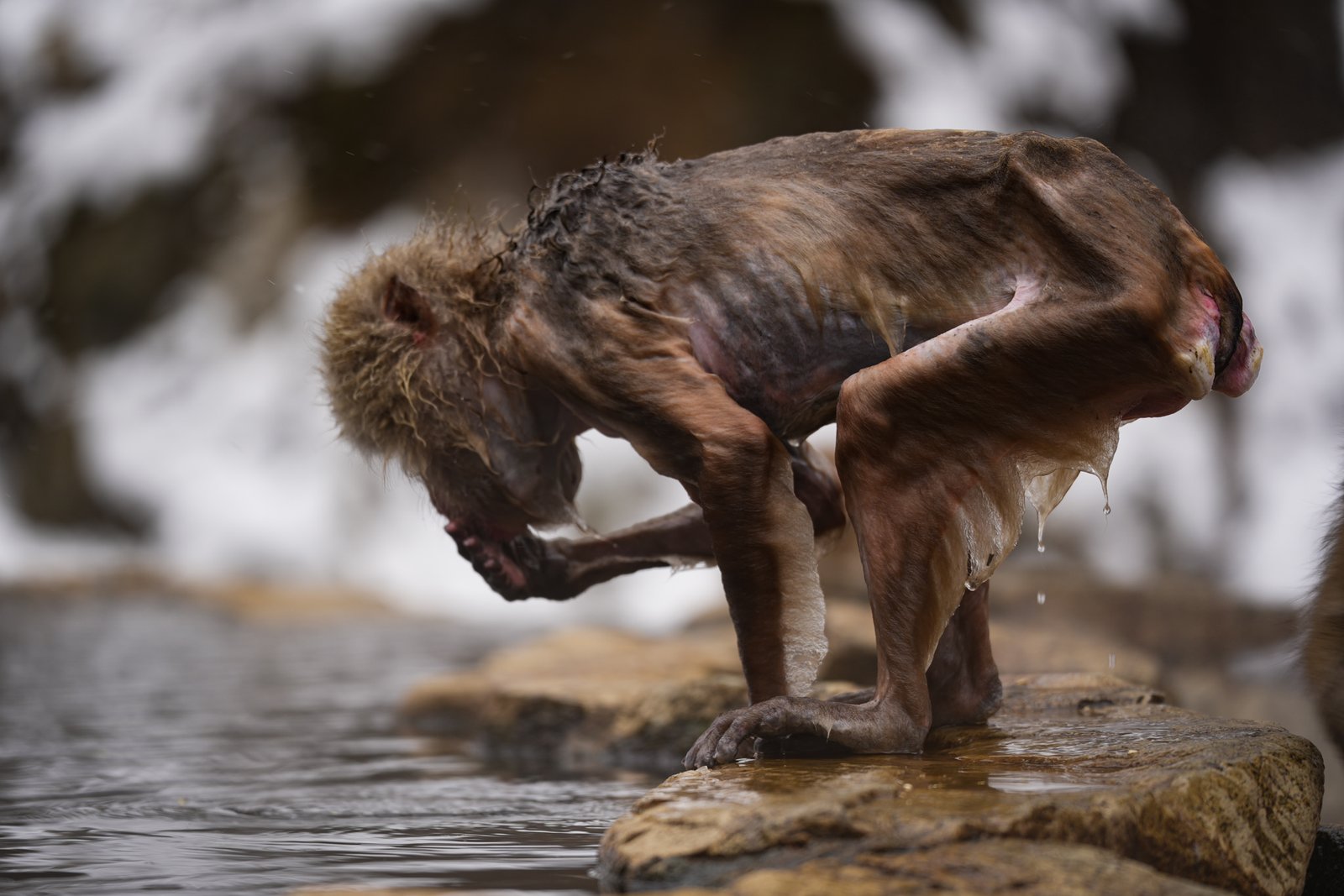
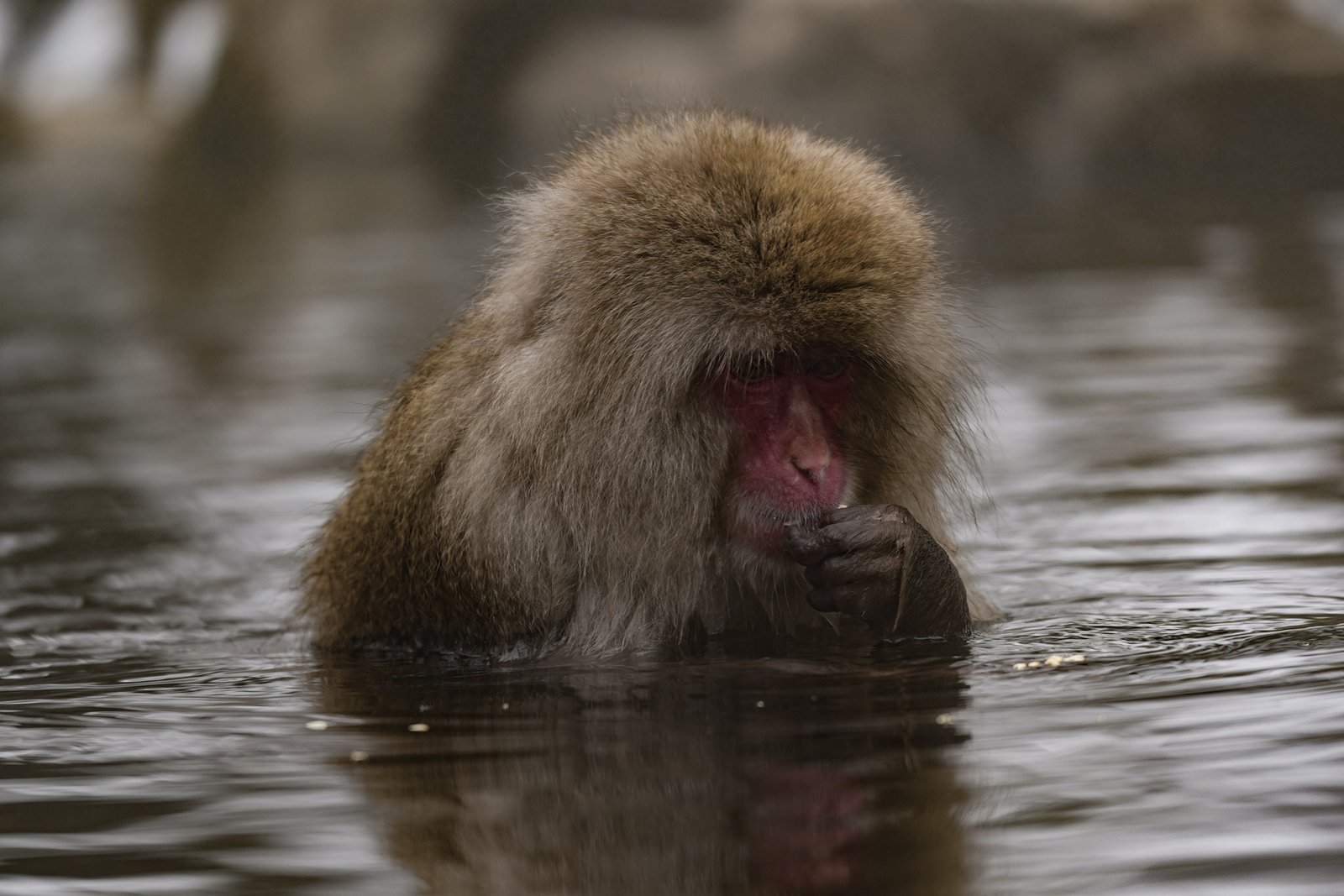
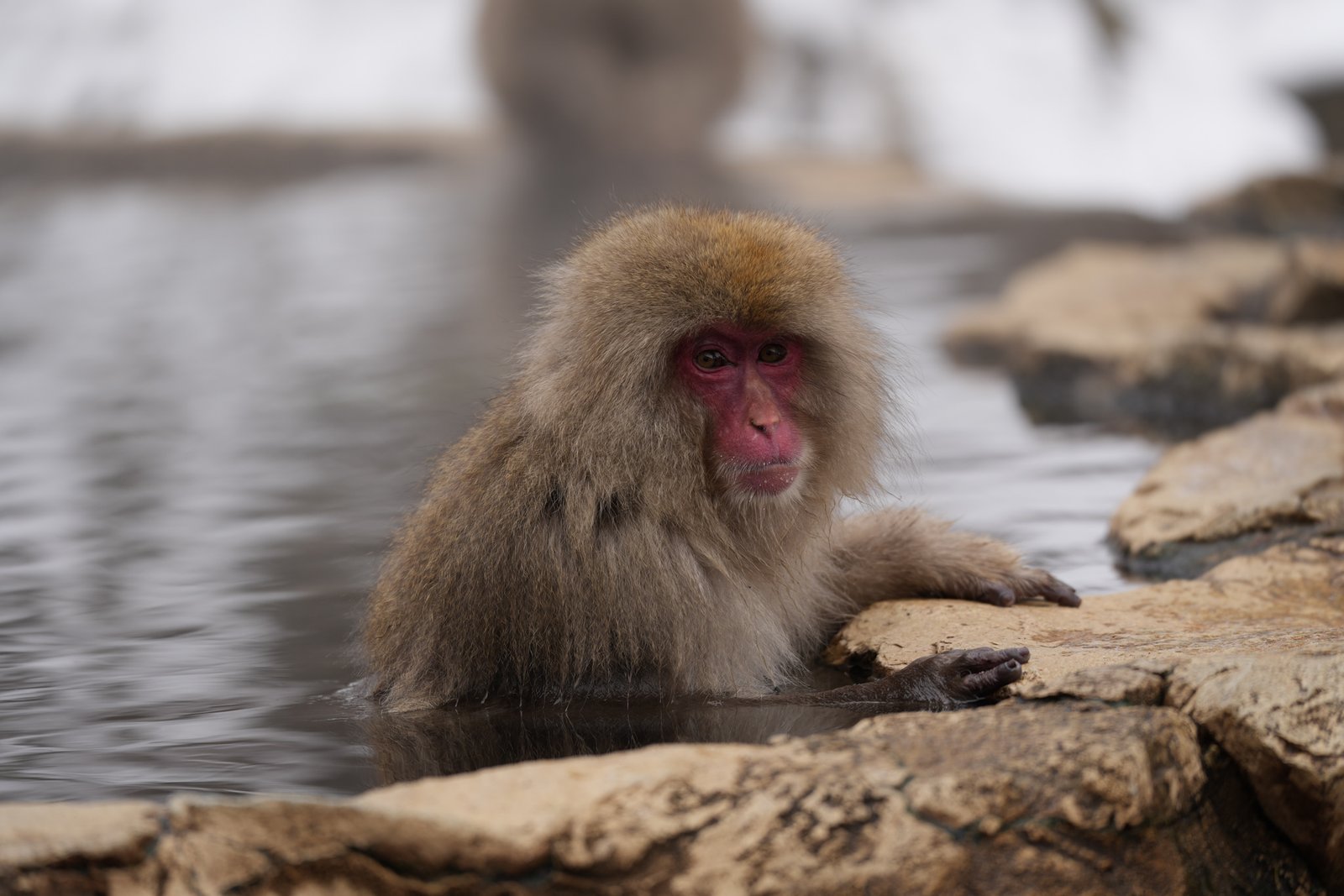
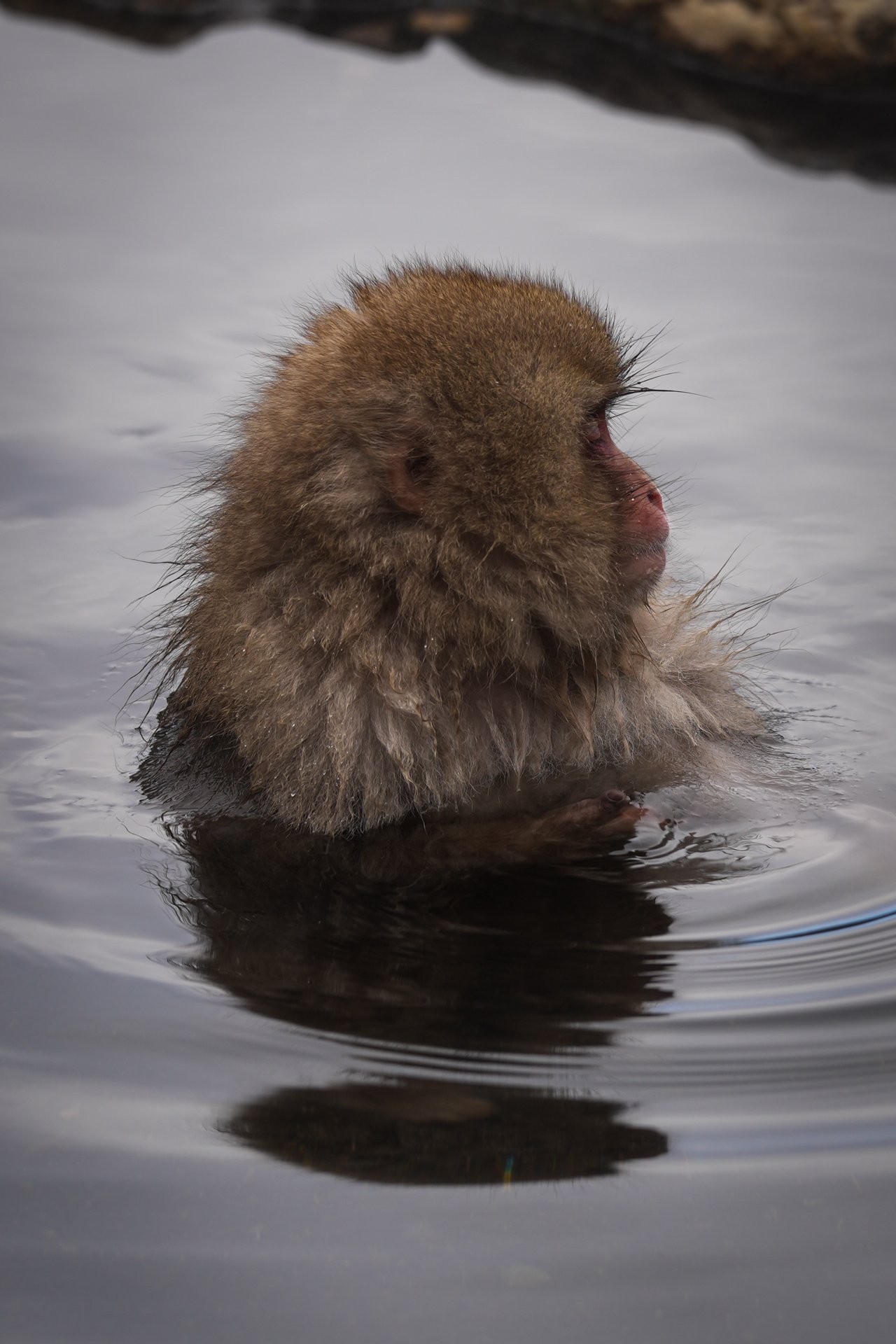
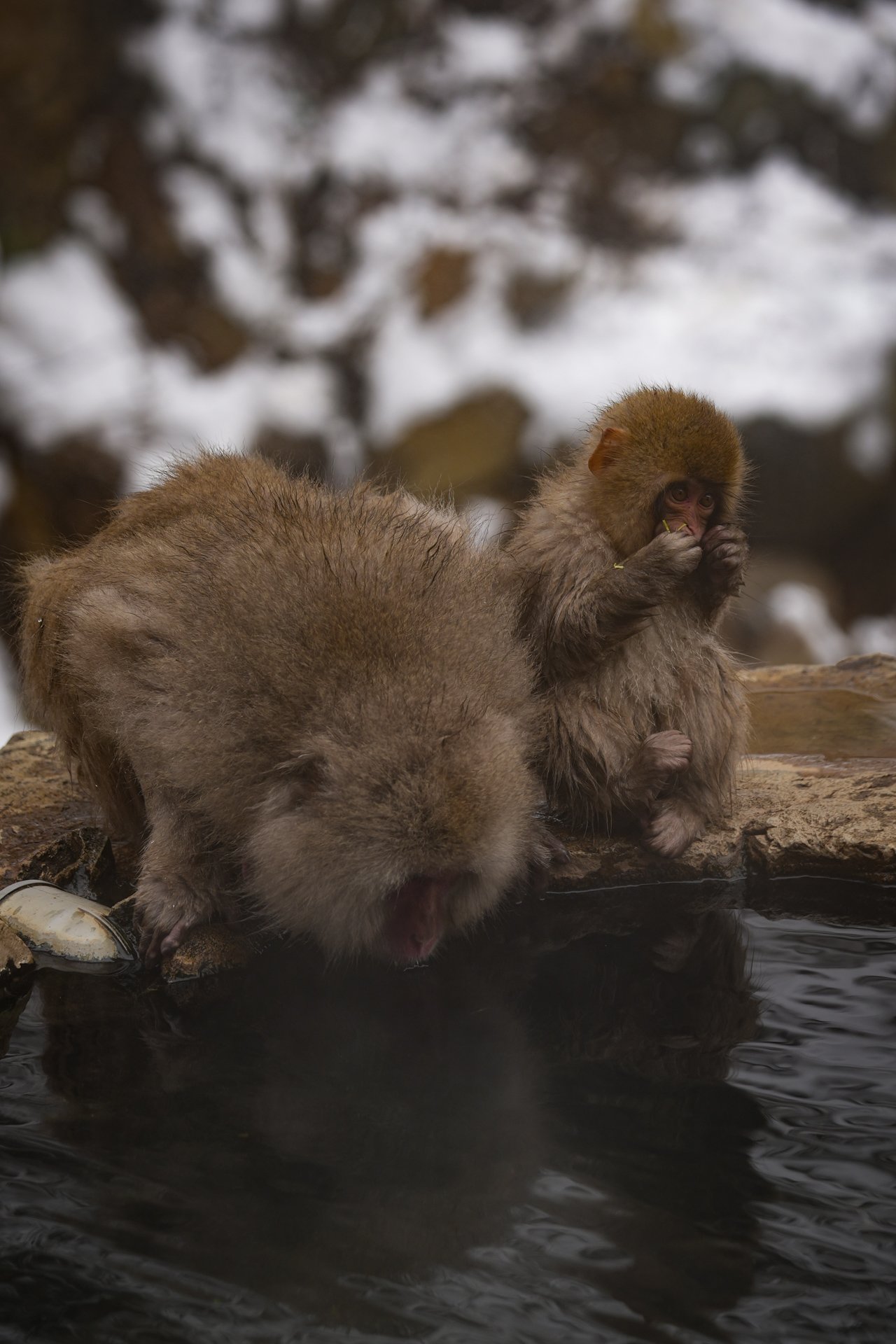
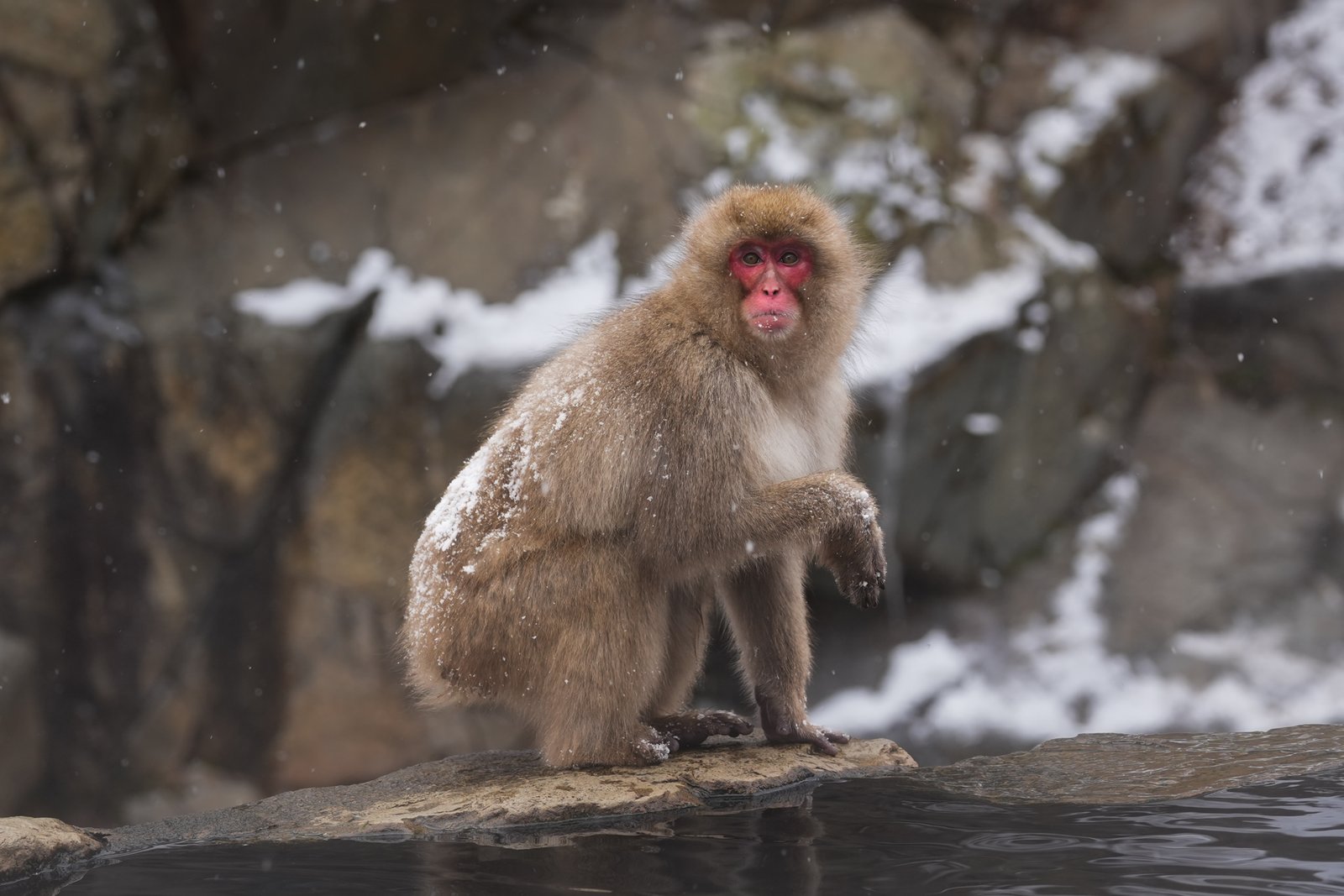
We are far from alone. Around the hot springs are visitors who look like professional photographers, dressed in National Geographic-style clothing and carrying cameras and lenses worth hundreds of thousands of yen.
Our own camera equipment suddenly feels rather modest by comparison.
When our stomachs begin to growl, we follow the winding road back down towards the village and the train station. We fill up on Japanese beef stew on rice and wash it down with a local Shigakogen beer at The Farmhouse.
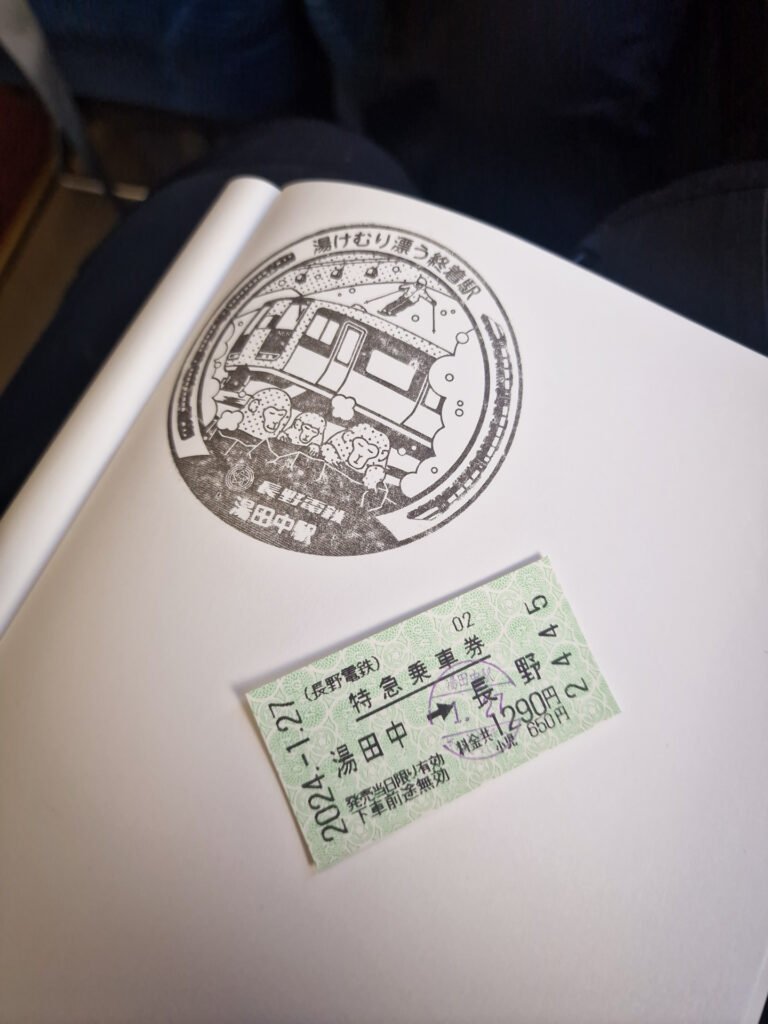
To our delight, we also find Yudanaka Station’s stamp, an eki stamp (駅スタンプ), and leave Yudanaka with the first stamp in our Japanese stamp book.
This time, we manage to book the correct train tickets straight away, and with plenty of time to spare, we board the train that will take us on to our next destination.